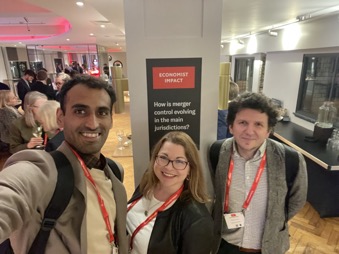
The Economist’s Antitrust Summit 2026, held on 26 February 2026 in City Hall, Westminster, brought together a formidable gathering of competition authority heads, senior regulators, practitioners, and industry representatives to take stock of the evolving global competition landscape. Co-chaired by Tamzin Booth, Editorial Director (B2B) at The Economist Group, and Jan Piotrowski, Finance and Economics Editor at The Economist, the full-day event traversed an ambitious agenda spanning US enforcement dynamics, EU merger control, ex-ante digital regulation, AI competition, economic nationalism, and private litigation. Oles Andriychuk, Anush Ganesh, and Pavlina Hubkova from the SCiDA team had the opportunity to attend the conference, which offered a timely window into the political, institutional, and substantive pressures reshaping competition policy across the US, EU, and UK.
By Anush Ganesh
The CMA’s Strategic Direction: Growth, Pragmatism, and the Four Ps
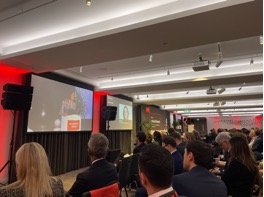
Sarah Cardell, Chief Executive of the UK Competition and Markets Authority (CMA), delivered the opening keynote and set a tone that permeated much of the day’s discussion: the relationship between competition enforcement and economic growth. Cardell emphasised the CMA’s operational independence while acknowledging the imperative not to work “in a vacuum.” She identified the CMA’s “Four Ps” as guiding priorities, with the pace of regulatory action receiving particular emphasis. In a memorable formulation, she observed that “principle alone does not put money back in people’s pockets,” signalling a departure from a purely adversarial, fines-based enforcement model towards outcomes-oriented intervention better suited to the UK market.
Sarah discussed the CMA’s recent acceptance of commitments in the mobile Strategic Market Status (SMS) cases, framing these as the most efficient response where firms had demonstrated willingness to engage constructively. This approach, she argued, frees the CMA to focus its limited resources on Fintechs, digital wallets, and other SMS-related workstreams. Looking ahead, she signalled forthcoming work including an update paper on scale-ups expected by Spring 2026, targeted support for dynamic firms (while acknowledging that identifying such firms is itself a challenge), and continued focus on public procurement. She also highlighted how the Government’s growth mandate is a key consideration shaping the CMA’s priorities.
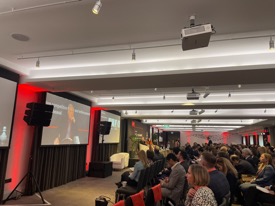
Doug Gurr, Chair of the CMA, joined the proceedings later in a fireside chat moderated by Tamzin Booth. Doug addressed questions about his Amazon-oriented background with characteristic directness, stating he had been honest about his industry past. He described his focus as bringing industry experience to the authority, praised the passion of CMA staff, and confirmed his intention to continue working within the Four Ps framework. Read together, the contributions from Sarah and Doug presented a CMA that is acutely aware of the political environment while seeking to maintain credible, outcomes-focused enforcement.
US Enforcement: Continuity, Change, and Political Entanglement
The panel on evolving competition theory and enforcement in the US, moderated by Jan Piotrowski, explored what “America First Antitrust” means in practice. James Keyte, Director of the Fordham Competition Law Institute, made the pointed observation that growth, now a value increasingly adopted by competition authorities globally, is not a traditional competition law value in the way that consumer welfare has been. Jessica Delbaum, Partner at A&O Shearman, offered a pragmatic counterpoint: while the approach of the US has shifted over time, the tools available to enforcers remain fundamentally the same. Manish Kumar, Partner at Freshfields, drew on his extensive FTC experience to discuss the volatile enforcement environment.
Perhaps the most notable moment of the day came during the fireside chat with Andrew N. Ferguson, Chairman of the US Federal Trade Commission. Ferguson discussed how many current FTC cases had been inherited from the Lina Khan era and criticised the previous administration for creating an environment of uncertainty that effectively blocked mergers by making it financially unviable for firms to challenge the FTC. He stated clearly that he would block a merger if he saw it as illegal but would otherwise allow transactions to proceed swiftly, framing this as a matter of prioritising FTC funds and resources. Most strikingly, Ferguson stated that if President Donald Trump asked him to drop a case, he would do so, arguing that the FTC needs to work under the Government’s mandate and pursue common goals. This candid admission provoked considerable discussion among delegates about the boundaries of agency independence.
EU Competition Policy: Market Integration, the DMA, and the Growth Imperative
Guillaume Loriot, Deputy Director-General for Competition at the European Commission, featured prominently across the day’s proceedings. In an engaging fireside chat, Guillaume drew on his experience overseeing merger control, noting that structural commitments were at times the best solution compared to behavioural ones. When pressed on whether politics affects the Commission’s decisions, he maintained that he always acts based on the needs of EU consumers. He noted that the EU Merger Guidelines are being developed but emphasised that the Commission does not wish to rush the process. Most significantly, Guillaume made the argument that the competitiveness concerns raised in the Draghi Report can be addressed through better market integration, a driver of competitiveness that can lead to pan-European firms capable of competing on the global stage.
The panel on ex-ante digital regulation in the EU offered a range of perspectives on DMA implementation. Alberto Bacchiega, Director for Digital Platforms at DG Competition, discussed the Commission’s work and emphasised that the DMA includes built-in safeguards designed to allow for choice and interoperability. Oliver Bethell, Director of Regulatory Affairs at Google, argued that regulation and innovation can coexist and noted the inherently disruptive nature of digital markets. Kyle Andeer, Vice-President at Apple, stressed the protection of children as a pressing priority and questioned whether the current regulatory path is always the right one. Angeline Woods, Senior Director at Uber, called for simplification, highlighting the need to closely monitor new instruments such as the proposed Digital Fairness Act. Chloe MacEwen, Senior Director at Microsoft, made the notable observation that competition law is evidence-based and that sovereignty is not a DMA goal.
The broader panel on EU competition law amid the change at the top explored what Commissioner Ribera’s appointment means for enforcement priorities. Alastair Chapman, Partner at Freshfields, suggested that the Commission currently appears more focused on environmental aspects than antitrust, and urged that businesses need regulatory certainty, arguing that constantly changing laws are unhelpful. He noted mixed messaging on European champions. Jonathan Faull, Chair of European Public Affairs at Brunswick Group and former Director-General at the European Commission, offered the provocative assessment that “the role of competition policy is vastly exaggerated.” Ori Schwartz, Head of the Competition Division at the OECD, cautioned that mergers alone will not create champions and that access to capital markets is what produces firms capable of competing globally. Avery Gardiner, Director of Global Competition Policy at Spotify, observed that international interconnectedness in competition policy is more visible now than a few years ago, while noting US scepticism towards the EU approach.
Agency Heads: Political Pressure, Digital Markets, and Interim Measures
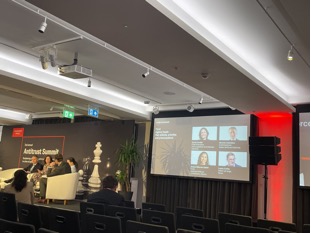
Two panels featuring competition authority heads provided some of the day’s most illuminating exchanges. In a discussion moderated by Lewis Crofts, Editor-at-Large at MLex, Sarah Cardell returned to the question of political pressure. She described the clear steer towards growth as helpful and noted that competition authorities should welcome political engagement as a means of remaining relevant. She emphasised, however, that in the UK the line is drawn at the level of individual decisions. Saverio Valentino, Commissioner at the Italian Antitrust Authority, stated that his authority faces no pressure specifically on economic growth and tends to focus enforcement on larger companies. He also noted the opening of a market study in the agri-food sector. Andrea Marván Saltiel, Chair of Mexico’s National Antitrust Commission and the International Competition Network, discussed the pressures she faces in her ICN role and highlighted the extensive outreach and technical cooperation among global agencies, with Sarah Cardell and Nuno Cunha Rodrigues serving as ICN Vice-Chairs.
A separate fireside chat brought together Andreas Mundt, President of the Bundeskartellamt, and Benoît Cœuré, President of the French Competition Authority. Andreas highlighted room for improvement with interim measures and described the Bundeskartellamt’s approach as one that is not predominantly fines-oriented. Benoît concurred on the potential of interim measures, noting that while France does not have an equivalent to Section 19a GWB, it has a strong abuse of dominance framework that operates alongside EU law. Both discussed ongoing cases and enforcement activity in their respective jurisdictions.
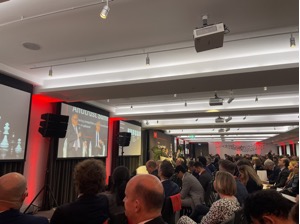
In the second agency heads panel, moderated by Henry Curr of The Economist, the focus shifted to digital markets and the DMA. Nuno Cunha Rodrigues, President of Portugal’s Autoridade da Concorrência, argued that AI as a core platform service needs to be carefully considered, pointing to the complexities of AI chips, foundation models, and downstream developers and the risk of vertical integration. He observed that the DMA was originally drafted with platforms in focus. Benoît Cœuré stated that it is too early to assess the success of the DMA but acknowledged that a great deal of work has already been done. Cani Fernández, President of Spain’s CNMC, concurred that it is premature to criticise the European approach but expressed support for the use of the DMA. Axel Desmedt, President of the Belgian Competition Authority, reflected on the Belgian experience and concurred with the other speakers.
Merger Control: Efficiencies, Remedies, and the Search for Champions
The panel on trends and change in merger control, moderated by Jan Piotrowski, explored developments across the US, EU, and UK. Adina Claici, Managing Director at BRG, argued for greater consideration of efficiencies in merger assessment. Antonio Bavasso, Partner at Simpson Thacher & Bartlett, observed that gradual change is always better for firms than sudden shifts and noted Brussels’ tradition of high rates of Phase 1 and Phase 2 clearances. Nicole Kar, Global Co-Chair of Antitrust at Paul Weiss, questioned whether the current institutional set-up is best suited for ease of doing business and noted that Europe is generally open to considering efficiencies, while in the US the two-year political cycle creates recurring uncertainty as changing governments bring shifting agendas.
The European telecoms consolidation panel explored the recurring push for national and cross-border consolidation against the backdrop of the Draghi Report and the EU’s Competitiveness Compass. This panel, moderated by Tom Lee-Devlin of The Economist, featured representatives from Telefónica, Vodafone, and BEUC alongside academic and economic perspectives from Tommaso Valletti of Imperial College and Frontier Economics. The discussion on the Foreign Subsidies Regulation (FSR) and FDI screening, moderated by John Ferguson of Economist Impact, drew attention to the practical burden of these regimes. Matthew Yeowart, Partner at Davis Polk, expressed hope that the FSR regime would become easier to navigate over time, while Karima El Sammaa, Regional General Counsel at ArcelorMittal, called for quicker decisions from the regime.
Competition in the AI Stack: Concentration, Foreclosure, and Consumer Protection
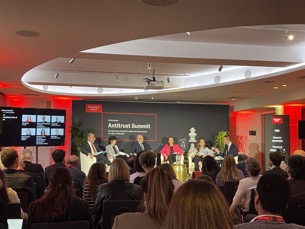
The panel on competition in the AI stack, moderated by Eddie Milev of Economist Impact, generated some of the sharpest exchanges of the day. Nuno Cunha Rodrigues stated plainly that he does not consider the AI stack to be currently competitive, noting that six firms control roughly 90 percent of it. Clare Kelly, Senior Competition Counsel at Google, countered that the cost of running AI is cheaper than before, though she acknowledged a lack of competition in cloud services. Cani Fernández indicated that competition authorities need to work together and expressed her support for interim measures, suggesting that the CJEU’s case law can serve as inspiration for the Commission to act. Rocio Concha, Director of Policy at Which?, emphasised the need to consider the full stack rather than only consumer-facing components and urged that European consumers must be considered when decisions on AI are taken.
Tom Smith, Partner at Geradin Partners, warned that dominant players may seek to foreclose markets in the AI sector. He called for regulatory action and argued that a firm like Google would always create a product that benefits itself rather than the market as a whole. These interventions underscored a growing consensus among panellists that competition enforcement in AI cannot wait for market outcomes to crystallise and that proactive engagement is necessary to prevent the entrenchment of existing advantages.
Economic Nationalism, Private Litigation, and the Boardroom View
The panel on competition agencies in an age of economic nationalism, moderated by Henry Curr of The Economist, grappled with whether antitrust is being used as a “Swiss army knife” for economic, political, and social problems. Jorge Padilla, Chair of International Practice at Compass Lexecon, argued that competition authorities generate externalities and impact growth, and that US scepticism towards the EU approach has partly been driven by perceptions that American companies are being put at a disadvantage. Stuart Hudson, Partner at Brunswick and former senior director at the CMA, stated simply that governments have a role to steer competition authorities. Dominic Long, Global Head of Antitrust at A&O Shearman, discussed the political environment and the pro-competition narrative.

The boardroom view panel, moderated by Tom Lee-Devlin of The Economist, offered industry perspectives on the regulatory climate. John Davies, Senior Advisor at Brunswick Group, highlighted how politics can affect corporate decisions and regulatory outcomes, and noted airline mergers as an interesting area to watch. Samantha Mobley, Senior Partner at Baker McKenzie, observed shifts in the FDI regime and stressed that firms need to be better informed on FDI than on traditional merger control. Marceline Tournier, Global Head of Antitrust at Nestlé, offered a candid reflection: she sometimes finds regulatory decisions logical and at other times finds them strange, and questioned the cost-benefit analysis underlying the FSR regime. Nicholas Banasevic, Corporate Vice-President at Microsoft, and Georg Boettcher, Chief Counsel Competition at Siemens, discussed the proliferation of regulatory instruments and the challenges of securing clearance across multiple jurisdictions.
Concluding Reflections
The Economist’s Antitrust Summit 2026 captured a competition policy landscape in flux. Across every panel, the tension between growth and enforcement, between political responsiveness and institutional independence, and between regulatory ambition and practical constraints shaped the discussion. The CMA’s pragmatic embrace of the growth agenda, the FTC Chairman’s remarkable candour about deference to presidential authority, the European Commission’s careful calibration of the DMA review, and the collective call for action in AI markets all point to a discipline that is being stretched in new directions. For the SCiDA project, these developments reinforce the importance of comparative regulatory analysis and the need to understand how competition law is being shaped not only by legal doctrine but by political economy, institutional design, and the competitive dynamics of digital and AI markets.