by Anush Ganesh* and Megan Kirkwood**
Introduction
On 28 January 2026, the CMA published four proposed conduct requirements (CRs) for Google Search in its capacity as the designated strategic market status (SMS) holder under the DMCCA. These CRs address fair ranking, publisher controls, user choice, and data portability. The consultation attracted 60+ published responses from a wide range of stakeholders, including Google itself, rival platforms, publishers, consumer groups, and academic institutions. This blog analyses the key themes, tensions, and regulatory gaps that emerged across all four CRs. The first two sections on the Fair Ranking and Publisher CRs were authored by Anush Ganesh while the sections on User Choice and Data Portability were authored by Megan Kirkwood. The blog consists of a table at the end as well, collating all respondents by category and their general feelings towards the CRs.

Fair Ranking: Scope, Transparency, and the Paid Search Question
The Fair Ranking CR exposed a fundamental divide between Google’s position that no evidence of unfair ranking had been found and the broad stakeholder consensus that the CR did not go far enough. Google contended that the CMA’s theory was inherently unlikely because it has no incentive to disadvantage publishers whose quality improves Search and, by extension, its own commercial position. CCIA supported this, warning that the approach risked motivating minimally evidenced complaints, while ICLE argued the objectivity requirement misunderstood the nature of search, whose value depends on selective curation rather than neutral presentation.

The weight of publisher evidence pointed in the opposite direction. Skyscanner provided among the most detailed quantitative submissions: the Google Flights widget appeared above organic results for 61% of tracked flight-related queries (67% by search volume, covering 9.9 million monthly searches), while its organic click-through rate had fallen significantly despite regularly ranking first. Skyscanner reported its prices beat Google Flights 74% of the time, with average savings of £40.30 per ticket. Yelp reported that Google’s self-preferencing had directly caused it to cease monetising its UK operations in late 2016, while still maintaining 267 UK-based staff. An anonymous specialised search competitor articulated a “triple-role” concern: Google simultaneously acting as referee, manager, and competing player in paid search.

Google’s “no incentive” argument deserves careful scrutiny. In vertically integrated markets, a platform’s incentive to favour its own downstream services can coexist with its general incentive to maintain search quality. The European Commission reached precisely this conclusion in Google Shopping, and Skyscanner’s quantitative evidence suggests the same dynamic is at play in UK flight searches. SCiDA’s response argued that the CR’s scope should be understood expansively to address self-preferencing concerns as an inherent dimension of fair ranking.
Several respondents argued the exclusion of paid content from the CR created a circumvention risk. MoneySuperMarket contended the organic-paid distinction was increasingly blurred. Lovehoney Group argued organic and paid search were complementary routes to market, citing CPC inflation in branded keywords. An anonymous financial services firm urged reclassification of ad load and auction measures from Category 3 to Category 2, and easyJet noted the distinction had become less visually pronounced on mobile. As the boundaries between organic and paid results continue to blur, particularly on mobile, excluding paid content risks creating a regulatory gap exploitable through design choices alone.
Independent Media argued that without explicit coverage of AI Overviews, AI Mode, Product Carousels, and other features, the CR would apply to less than 5% of available SERP real estate. Skyscanner reported that Gemini now exclusively searches Google Flights for transactional queries, locking out competitors even when users explicitly request alternatives. The CMA confirmed at its roundtable that AI Mode and AI Overviews fall within the CR’s scope, which is welcome; however, the consultation text could be clearer on this point. A CR that applies principally to traditional blue links risks becoming obsolete before it takes effect.

On transparency, Google accepted publishing an external version of its Fair Wholepage Composition Policy but objected to broader disclosure obligations, arguing they would expose Search to manipulation, enable competitors to free-ride, and prove impractical. Google’s cost objections included experience in France, where it spent a substantial (redacted) sum on monitoring compliance in a single case, and it estimated compliance costs ‘considerably higher’ than the CMA’s £15 million over five years. The broader consensus favoured stronger mechanisms for advance notice and faster complaint resolution, though proposed timescales varied dramatically. CCIA raised potential conflicts with the Online Safety Act, and UKHospitality warned against replicating unintended consequences observed under the DMA.

SCiDA recommended that the definition of ‘material change’ triggering advance notice should cover both ranking policy changes and algorithmic core updates, with different notice periods calibrated to the scale and impact of the change.
Publisher Controls: Crawler Separation, Fine-Tuning, and the Consent Architecture
The Publisher CR generated the largest volume of responses and the most polarised positions. Google accepted the core proposals for a new Search genAI grounding control but opposed splitting Google-Extended into separate training and grounding controls, characterising this as a “free-rider’s charter.” DMG Media took the opposite position, arguing the default should be opt-out with express opt-in consent through Google Search Console. Corint Media proposed an interim measure to fully disallow AI Overviews until a fair competitive solution had been found. SCiDA argued that separate controls for training and grounding are essential to provide publishers with genuine, granular choice. Google’s “free-rider” characterisation misframes the issue: publishers whose content generates AI answers that substitute for visits to their sites are not free-riding but having value extracted without adequate consent or compensation.

The most analytically significant theme was the risk that fine-tuning could circumvent grounding opt-outs. An anonymous publisher provided the most detailed critique: since fine-tuning reduces hallucination, it necessarily reproduces publisher information in generative answers, meaning there is no functional opt-out if fine-tuning remains unrestricted. DMG Media argued fine-tuning permanently modifies model parameters and embeds durable editorial value. The NMA argued fine-tuning was likely of much higher market value than pre-training for publisher content, because AI models disproportionately benefit from high-quality, domain-specific, up-to-date material. The Financial Times, BBC, and an anonymous publisher all called for fine-tuning to be treated as a distinct category with a separate control. This represents a significant gap: the consultation distinguished between pre-training and grounding but did not adequately address fine-tuning, which several respondents convincingly argued could render grounding opt-outs functionally meaningless.
On crawler separation, Cloudflare presented empirical evidence from its network: among the top 10,000 domains, only 29 fully disallowed Googlebot in robots.txt compared to 335 for GPTBot, quantifying what it called “compelled consent.” The tenfold difference demonstrates that publishers cannot exercise meaningful choice when the same crawler serves both search indexing and AI training. The fact that Microsoft and OpenAI already provide separate crawlers undermines the proportionality objection. Corint Media made a critical factual observation: blocking Google-Extended does not actually prevent content from being used in AI Overviews or AI Mode, because Google defines Google-Extended as covering only uses outside of search. If accurate, the existing control structure is substantially less effective than the CMA’s analysis assumes. Corint Media further reported that using “No Snippet” to block AI Overviews resulted in approximately 90% loss of all search referral traffic, effectively rendering the control punitive.
Several publishers provided striking empirical evidence of traffic losses. An anonymous publisher reported losses of 50 to 90% from Google search over two years, with AI Overviews expanding from 0% to over 65% of relevant searches; when an AI Overview appeared, clicks off Google declined by an average of 61%. A striking number of respondents expressed frustration at the CMA’s deferral of a payment-for-content CR. PINF traced the legislative history from the 2019 Furman and Cairncross Reviews, citing ministerial statements that the regime was designed to rebalance the platform-publisher relationship including through fair payment terms. The traffic loss data, combined with the deferral of payment-for-content measures, creates an urgent gap. SCiDA urged the CMA to accelerate its work on payment-for-content and to consider whether the current CR framework adequately fulfils the DMCCA’s statutory purpose.
User Choice: Choice Screens, Test Drives, and AI Chatbots
The CMA has proposed imposing a User Choice conduct requirement, which would expand the rollout of choice screens allowing users to select from various search engines.
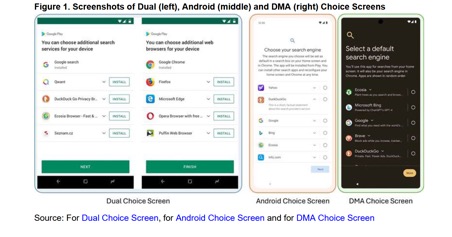
Figure 1 Taken from the CMA’s Consultation: User Choice Conduct Requirement for Google’s general search services, p. 9.
Currently, during device setup or after a reset, Android users are prompted to select a default search provider, affecting the Search widget, Search app, and Chrome app access points. Such choice screens were voluntarily rolled out in the UK from 2020, following the European Commission’s Google Android decision. The CMA is now proposing to bring choice screens closer to those rolled out in the EU as a result of the Digital Markets Act (DMA) Article 6(3), which expanded their scope by requiring a choice screen on opening Google Chrome at a certain time after compliance day, on top of the initial device set-up screens. The DMA also expanded the access points to additionally cover Chrome on Apple iOS, iPadOS and desktop. Likewise, the CMA is proposing to match the DMA by rolling out annual choice screens and covering more access points. Going further, the CMA is also proposing a “test drive” function, which would allow users to try out a new default search provider for two weeks, with the ability to stick with that provider or try out a new one. Additionally, the CMA proposes a device-level setting as a one-stop shop to set a default, and a Search default setting API, which would allow a search provider to know if they have been selected as a default.
On the whole, most respondents were in support of the conduct requirement, including industry players and consumer rights groups such as Brave Software, Dnes & Felver PLC, DuckDuckGo, Microsoft, Mozilla, OpenAI, Trainline, Vivaldi, Which? and Platform Leaders. Some respondents were cautiously supportive, or only supportive of certain elements. For instance, from a more academic perspective, the Knight-Georgetown Institute (KGI) supported the intervention of choice screens; however, they made it clear that the set of conduct requirements being pursued at this stage “are not designed to meaningfully lower barriers to entry in general search service.” They emphasised that choice screens on their own will not move the needle while Google continues to pay to be the default across devices, such as Apple’s. That being said, KGI shared research into good design practices for choice screens. Meanwhile, Google, Sony, Samsung and Chamber of Progress expressed support for select aspects of the conduct requirement, while vehemently opposing others. These respondents were united in their concern for user fatigue, arguing that anything more than default selection at initial set-up could lead to user confusion and exhaustion with choice screens. However, they supported interventions like the creation of a device-level setting for selecting a default and a Search default API, as well as rolling out to devices like desktop Chrome and Pixel. Meanwhile, the only respondents who were against the conduct requirement were the industry associations Computer and Communications Industry Association (CCIA), the International Center for Law & Economics (ICLE), and the Information Technology and Innovation Foundation (ITIF). CCIA had several concerns, such as the inclusion of potential privacy damaging search services in choice screens, while generally arguing that consumers currently maintain easy ways to switch defaults. ICLE and ITIF both point to the ineffectiveness of the previous iterations of choice screens; therefore, regarding more choice screens as only creating a worse user experience with little to no benefit.
Those in support of the intervention broadly agreed on the expansion of access points, meaning rolling out choice screens to also capture Chrome on desktop and on Apple devices, the creation of a Search default API, the need for prompts by Google to be neutrally designed, and to differing extents, that the CMA should be involved in the governance and design of choice screens. Indeed, Google appeared willing to collaborate with the CMA on the design of information screens regarding the choice screens, and how the choice screens should be ordered, as part of the consultation asked whether choice screens should order search services randomly or by popularity. Other respondents, such as Mozilla, have stated that Google must be required to regularly report to the CMA, providing information regarding rejected applications, and supply compliance reports every six months, though Google argued that this level of reporting would be excessive. DuckDuckGo and KGI add that Google has an incentive to limit the scope of services as much as possible, warranting CMA oversight.
The main points of contention included the general effectiveness of choice screens, whether generative AI chatbots should be included in the choice screen, how often choice screens should be shown, whether search services should get advance notice to enable them to invest in pre-choice screen marketing campaigns, and the inclusion of a test drive function. On the first point, as noted previously, those against the conduct requirement, as well as those cautiously in support, have expressed doubts about the overall effectiveness of choice screens.

Google provided a comprehensive analysis on the issue of user fatigue, illustrating the example of a user purchasing a new Android device and walking through the number of choice screens they might be confronted with. Depending on when the user buys the new Android device, they could end up clicking through up to ten choice screens, from set-up, to test drive roll-out, to logging into various Chrome profiles, to test drive renewals at different access points, then again being faced with annual choice screen renewal at various access points, a loop which then starts again if they user buys a new device in two year cycles, as Google states is the average. Google iterates that the constant flux of choice screens is “annoying” to users and a huge time cost.
However, several respondents have pointed out that well-designed screens offer consumer choice as well as active engagement and long-term retention. For instance, DuckDuckGo found that after the rollout of DMA choice screens, in countries with high brand recognition, “DuckDuckGo’s selection rates increased by approximately +40% following its rollout compared with the older choice screen version on Android” and that “users who actively chose DuckDuckGo via a choice screen show materially stronger long-term retention and usage than those who found and installed us independently.” Therefore, improving on past choice screens and coming into line with those rolled out in the EU may see greater success. The two search providers diverge extensively, with one arguing that choice screens are excessive and time-consuming, and the other, a way to actively engage users who express “satisfaction” on multiple choice screen interactions
Finally, a significant number of respondents commented on the inclusion of AI chatbots in the choice screens. At least five respondents were in favour, and six were against. Chamber of Progress, Microsoft, OpenAI and Platform Leaders argued for the inclusion as they see chatbots, particularly those with search functionalities, illustrate the evolving nature of search technologies. An anonymous respondent argued that there should, however, be a second screen to separate traditional search and chatbots, as they are concerned about the potential conflation of search and large language model technologies, particularly the problems of LLM accuracy. Which? stated that they are neither for nor against the inclusion, but similarly argue for a visual signifier to separate traditional search from AI-based search. Meanwhile, CCIA believes chatbots are already “subject to significant existing competition and did not address the same set of user needs”, while DuckDuckGo also agrees that users do not use chatbots for search. The publishers that responded, specifically, Guardian Media Group, News Media Association, News/Media Alliance and the Professional Publishers Association, all write that the inclusion of chatbots would undermine the purpose of the Publisher CR, lamenting that chatbots are currently unregulated and do not drive traffic to publisher websites.
Data Portability
The purpose of the Data Portability CR is to turn a currently voluntary API into a legally protected one. The Google Data Portability API was launched in Europe to bring Google into compliance with DMA Article 6(9), which mandates that users themselves or third parties, with the end users’ consent, be able to obtain real-time and continuous access to users’ data, both provided and generated on the platform. This was largely in response to the shortcomings of data portability under the General Data Protection Regulation Article 20, where users largely could not take advantage of their right to access their own data.
The Data Portability CR received almost unanimous support, with a mix of industry, non-profit and consumer rights organisations, including Google, Emerge, Gener8, DataPods, the Coalition for Online Data Empowerment (CODE), Open Data Institute, Which?, Chamber of Progress and Platform Leaders in favour. The only respondents against were CCIA, Consumer Choice Center, and ITIF, which broadly found that the CMA had not proved the intervention was necessary or proportionate, generally preferring to leave the API as voluntary because, according to their argument, making it mandatory could take away Google’s flexibility to reshape the API design and scope. However, those in favour, including Google itself, found that making the voluntary API into a legally protected one is proportionate and coherent, with Google acknowledging “that the proposed CR could further promote confidence in businesses investing in data portability over the long term.” Chamber of Progress and Platform Leaders were of the view that the API should remain the same as is currently offered, and there was a broad consensus that it is easier to maintain the same API across jurisdictions, with CODE and Gener8 agreeing on the matter.
That said, CODE, Emerge, DataPods, and the Open Data Institute had suggestions for improvement, with CODE maintaining that any improvements to the API should be applied across the EU and UK. For instance, CODE and the Open Data Institute still take issue with the security verification costs that Google requires, with both stating that the costs are prohibitive to smaller businesses and developers. Additionally, the Open Data Institute and Emerge both argued that the API is not real-time or continuous, with Emerge providing detailed evidence of how unreliable data transfer speeds are, along with evidence that speed matters. CODE also mentioned that they previously raised the issue of unpredictable data transfer speeds and had also raised the issue of the consent experience, a point echoed by Emerge. Emerge articulated that the orange warning screen that appears during the consent procedure is usually “reserved exclusively for genuinely dangerous situations: phishing attempts, malware downloads, compromised accounts, and unsafe websites. […] The fact that Google deploys this same alarm signal when a user exercises their legal right to port their own data is extraordinary.” Finally, CODE mentions missing data scopes, arguing that they had also previously raised concern that data scopes available to export using Google Takeout, its manual data portability tool, were not available through the API. Gener8 also stated their disappointment that Gemini data would not be available through the API, though it is an option on Takeout. However, on all of these issues, Google merely stated that they “welcome[…] the CMA’s clarification that no significant shortcomings were identified.” Therefore, it is unlikely that further adjustments to the API will be made.
Conclusion
Across all four CRs, a consistent pattern emerges: Google’s positions are not without merit on individual points, particularly around gaming risks, compliance costs, and the practical difficulties of transparency in complex systems. But taken together, the consultation responses reveal a regulatory framework that, while promising in design, risks falling short in execution. The Fair Ranking CR’s exclusion of paid content and ambiguity around AI features create gaps that may widen as search evolves. The Publisher CR’s failure to address fine-tuning and the deferral of payment-for-content leave publishers facing value extraction without adequate safeguards. The User Choice CR enjoys broad support but faces unresolved questions about chatbot inclusion and choice screen effectiveness. The Data Portability CR, though almost unanimously welcomed, may stall at the implementation stage if data transfer speeds and consent design issues remain unaddressed. The CMA now faces the challenge of translating consultation feedback into conduct requirements that are both robust enough to address the identified harms and adaptable enough to keep pace with a rapidly evolving digital landscape.
Stakeholder Response Tables
Fair Ranking CR
| Respondent | Key Arguments | Position |
| SMS-Designated Firm | ||
| No evidence of unfair ranking found. Transparency enables SEO manipulation. Proposes alternative package. Six-monthly reporting excessive. | Opposes | |
| Publishers and Media | ||
| NMA | Outcome-based non-discrimination. 30 business-day notice. Complaints process too slow. Three-month implementation. | Strongly supportive |
| Independent Media | Without AI feature coverage, CR covers <5% of SERP real estate. 30 days advance notice needed. | Supportive |
| DMG Media | Explicit SRAP prohibition. Tiered notice periods (1 month routine, 6 months major). 14-day complaints response. Accelerate payment CR. | Strongly supportive |
| Bachtrack | Existing Google documentation not actionable. YouTube and AI erosion. Section 3 paid-for content drafting gap. | Supportive |
| Search and Comparison Services | ||
| Yelp | Accelerate specialised search CR. Ceased UK monetisation in 2016. Open OneBox to third parties. | Strongly supportive |
| Skyscanner | Google Flights above organic for 61% of queries. Prices beat Google 74% of time. Gemini locks out competitors. | Strongly supportive |
| MoneySuperMarket | Paid/organic convergence creates circumvention risk. Costs (GBP 15m) vs revenues (GBP 20bn) disproportionate. | Supportive |
| Lovehoney Group | Paid content should be included. CPC inflation in branded keywords. Binding ADR with independent body. | Supportive |
| Siinda | Full SERP scope needed. 580,000-keyword monitoring. Manual exclusions economically existential. | Strongly supportive |
| easyJet | 6 to 12 month notice periods. DMA caused unintended consequences for flight search. | Supportive |
| Industry Associations and Think Tanks | ||
| CCIA | No evidence of bias. OSA regulatory interaction gap. Transparency risks manipulation. | Opposes |
| ICLE | Objectivity requirement misunderstands search value from selective curation. | Sceptical |
| Platform Leaders | Distinguishes AI source selection from conventional presentation. Emergency escalation process needed. | Supportive |
| Other Respondents | ||
| Anonymous 4 | Google as referee, manager, and player simultaneously. Data neutrality needed. | Supportive |
| UKHospitality | Sequenced approach preferred. DMA unintended consequences in hospitality. | Cautious |
| Academic and Research | ||
| SCiDA | Broadly agrees with scope including AI Overviews and AI Mode. Complaints process should not impose disproportionate evidentiary burdens. | Broadly supportive |
Publisher CR
| Respondent | Key Arguments | Position |
| SMS-Designated Firm | ||
| Accepts core grounding control. Opposes splitting Google-Extended (free-rider risk). Transparency cuts across government AI policy. | Partially supportive | |
| Major Publishers | ||
| BBC | Per-purpose controls. Crawler separation. Google monitoring obligation. Standardised format. | Strongly supportive |
| Financial Times | Granular per-purpose controls. Fine-tuning as grounding substitute. Circumvention via open-source datasets. | Strongly supportive |
| NMA | Crawler separation if behavioural remedies fail. Fine-tuning higher value than pre-training. Prominent attribution. | Strongly supportive |
| DMG Media | Default opt-out. 24 existing crawlers vs GBP 150m cost claim. Search API monetisation gap. | Strongly supportive |
| Anonymous 5 | 50 to 90% traffic losses. 61% click decline with AI Overview. <1% clicks in AI Mode. S3 bucket model. | Strongly supportive |
| Publishing Industry Bodies | ||
| Publishers Assn | OUP 19% CTR decline. Complete crawler decoupling. International alignment needed. | Strongly supportive |
| AOP | Competitors already operate separate crawlers. Payment terms should be developed now. | Supportive |
| Music Publishers Assn | Consumption model unsuitable for music. Songwriters cannot edit third-party robots.txt. | Supports intent; framework unsuitable |
| PINF | 43% traffic reduction projected. 4.4m people in news deserts. 27 local publishers co-sign. | Strongly supportive |
| Technology and Infrastructure | ||
| Cloudflare | 29 vs 335 domains blocking Googlebot vs GPTBot. Distinct User-Agents straightforward. | Strongly supports separation |
| Corint Media | Google-Extended does NOT block AI Overview use. No Snippet causes approx. 90% traffic loss. | Strongly supportive |
| Rights and Creative Industries | ||
| FWA | Selective licensing entrenches select publishers. FRAND terms required. | Supportive |
| APMA | GBP 1.7bn sector. Zero-click environment. Disintermediation of comparison content. | Supportive |
| Academic and Research | ||
| Davies & Cohen | Opt-out ineffective and illusory (Raz). Proposes opt-in or cease-and-desist removing AI Overviews. | Challenges opt-out design |
| KGI | Training, grounding, fine-tuning are contested terms. Outcome-based controls. YouTube gap (10bn+ videos). | Sceptical of controls |
| SCiDA | Compelled consent well-founded. Supports unbundling search crawling from AI training. | Broadly supportive |
| Industry Associations | ||
| CCIA | Publishers indicated they would not use opt-out. Separate Gemini crawling undermines unified crawler claim. | Opposes |
| Chamber of Progress | Supports CMA rejection of separation. Warns against traffic allocation. | Cautious |
User Choice CR
| Respondent | Key Arguments | Position |
| SMS-Designated Firm | ||
| Accepts choice screens at setup. Opposes annual retriggering (10+ pop-ups) and test-drive. Wrong counterfactual. | Partially supportive | |
| Search Engine and Browser Competitors | ||
| DuckDuckGo | 1% switching is a floor. +40% selection in DMA markets. Wants full randomisation and deep-link URIs. | Strongly supportive |
| Microsoft | Safari exclusion undermines CR (2 to 3bn Google searches/month via Safari). Supports broad eligibility. | Supportive |
| Brave Software | Novel choice day concept: single annual date for all users. Restrict Google pre-emptive advertising. | Supportive |
| Mozilla | Requests simultaneous browser choice screen. Firefox +100% DAUs on iOS in EU. | Supportive |
| Vivaldi | Cross-screen dominance concern: entities on multiple screens should choose one. | Supportive |
| OEMs | ||
| Samsung | Opposes annual resurfacing and test-drive. Challenges GBP 149.10 benefit figure. Choice fatigue risk. | Significant reservations |
| Sony | Annual non-skippable screen excessive. Supports test-drive with clear post-trial info. | Broadly supportive |
| Consumer Organisations | ||
| Which? | Broadly supports. Inconsistency in Google search app vs widget treatment. | Supportive |
| Industry Associations and Think Tanks | ||
| CCIA | GBP 149.10 implausibly high. AI chatbot exclusion from SMS inconsistent with choice screen inclusion. | Opposes |
| ICLE | Android choice screen reduced Google share by <1 percentage point. | Sceptical |
| ITIF | European choice screens had virtually no effect on market share. | Opposes |
| Chamber of Progress | Opposes engineering switching outcomes. Default payment elimination could raise handset prices. | Cautious |
| KGI | Limited impact without restricting default payments. CMA should determine eligibility. | Sceptical |
| Platform Leaders | Eligibility must accommodate evolving search. Pilot test-drive via UX testing. | Supportive |
| Academic and Research | ||
| SCiDA | Supports extended choice screens and test-drive functionality. ‘Reasonable number’ of providers undefined, effectively delegating market-shaping variable to Google. Recommends CMA specify 5 to 7 providers. Post-test-drive prompt design critical. | Broadly supportive |
Data Portability CR
| Respondent | Key Arguments | Position |
| SMS-Designated Firm | ||
| Broadly supports formalising DPAPI on same EEA terms. | Supportive | |
| API Users and Data Services | ||
| Emerge Protocol | Export duration uncorrelated with volume. >70% consent flow drop-out. Phishing-style warning icon. | Supportive; wants speed |
| Gener8 | Welcomes legal protection. Disappointed Gemini data excluded. | Supportive |
| Datapods | Cross-API ToS conflict (YouTube API access refused). Derived data should be included. | Supportive |
| CODE | CASA verification costs. Scare screens. Missing data scopes. | Supportive |
| Consumer Organisations | ||
| Which? | Minimum requirement. Should not delay further click-and-query and web index obligations. | Supportive |
| Industry Associations and Think Tanks | ||
| CCIA | Unclear what formalisation adds. Low usage may reflect unimpressive opportunities. | Sceptical |
| ITIF | Mandating API reduces Google’s investment incentives. | Opposes |
| Platform Leaders | Open Banking analogy (GBP 4bn+). Search data raises privacy considerations. | Supportive |
| Chamber of Progress | DMA alignment. <20 businesses used API in first EEA year. | Supportive |
| Academic and Research | ||
| SCiDA | Agrees formalisation necessary for legal certainty and investment confidence. DMA alignment welcome. | Supportive |
*Anush Ganesh is a postdoctoral research fellow at the University of Exeter working on the SCIDA project. He submitted SCiDA’s response to the CMA’s consultation which has been referred to in this blog.
**Megan Kirkwood is an independent researcher and writer on digital policy. She also submitted evidence to the CMA’s consultation to include data portability as a conduct requirement on behalf of the Coalition for Online Data Empowerment (CODE). She does not receive monetary or non-monetary compensation for this work.