AI markets are booming across Europe and beyond, and competition and innovation in this sector have sparked extensive discussions worldwide. In just 22 days, the European Commission announced five investigations into artificial intelligence (‘AI’) related services, though not under the same regulatory framework. The investigations into Meta AI and Google AI Overview and AI Mode fall under Article 102 of the Treaty on the Functioning of the European Union (TFEU), while three market investigations regarding cloud computing services – including AWS and Azure – are conducted under the Digital Markets Act (DMA). These actions appear to be part of the Commission’s broader, ongoing monitoring of AI markets within the European Economic Area (EEA), although its pace has been slower than that of certain national competition authorities.
by Kena Zheng
Timeline of the Commission’s Announcements:
- On 18 November 2025: Three DMA investigations into cloud computing services – essential AI infrastructure
- On 4th December 2025: Antitrust investigation into Meta AI
- On 9th December 2025: Antitrust investigation into Google AI Overview and AI Mode
Google AI – Publishers and YouTube Creators on the Defensive Against Unfair Profit Distribution
The fact that Google trains its AI models using content published online by publishers and YouTube creators is hardly news. Since the advent of generative AI in 2023, there have been extensive discussions about Google’s competitive advantage and the potential use of such data in its Gemini models.
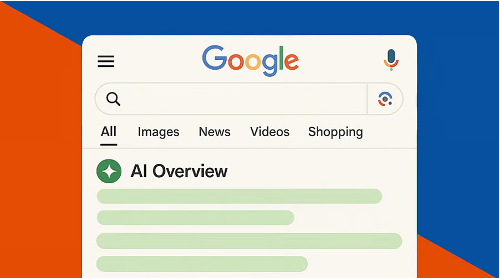
Google’s AI Overviews feature displays AI-generated summaries responsive to a user’s search query above organic results, while AI Mode functions as a search tab similar to a chatbot, answering users’ queries in a conversational style. However, the web publishers whose content powers these generative AI services on Google search results pages receive no compensation, or inappropriate compensation, and cannot opt out of having their content used. Many publishers heavily depend on Google Search for user traffic and are reluctant to risk losing access to it. At the same time, Google’s AI Overviews and AI Mode fundamentally alter the profit distribution system established in the digital platform era. Concerns have emerged that AI Overview could reduce website traffic, thereby limiting the advertising revenue of publishers. For example, the Daily Mail reported that the number of users clicking its links from Google search results fell by around 50% after the launch of the AI Overview.
Similarly, YouTube content creators face comparable challenges. Creators uploading videos to YouTube are required to grant Google permission to use their data for different purposes, including training generative AI models. Yet Google neither compensates creators for this use nor allows them to upload their content without granting permission. Meanwhile, competitors seeking to develop AI models are prohibited by YouTube’s policies from using YouTube content to train their own models, effectively giving Google exclusive access to this valuable data.
As a result, both publishers and YouTube content creators face competition from Google’s AI services while being disadvantaged by Google’s unrestricted use of their content to train its AI models.
As EU antitrust chief Teresa Ribera highlighted: “A healthy information ecosystem depends on publishers having the resources to produce quality content.” Taking these concerns into account, the Commission has decided to investigate whether Google has breached EU competition rules by using the content of web publishers and YouTube creators for AI purposes. The investigation will examine whether Google is distorting competition by imposing unfair terms and conditions on publishers and content creators, or by granting itself privileged access to such content, thereby placing developers of rival AI models at a disadvantage. Ultimately, the Commission may also address whether Google has leveraged the work of publishers and creators to build its AI tools, from which it can profit.
Meta AI – Could WhatsApp Become a Closed AI Shop?
Meta has recently integrated its AI assistant, Meta AI, into the WhatsApp interface across European markets since March 2025, allowing businesses to communicate directly with customers via conversational AI. In practice, various AI providers offer access to their AI assistants via WhatsApp, allowing users to perform tasks such as answering questions, generating content, or accessing customer support.
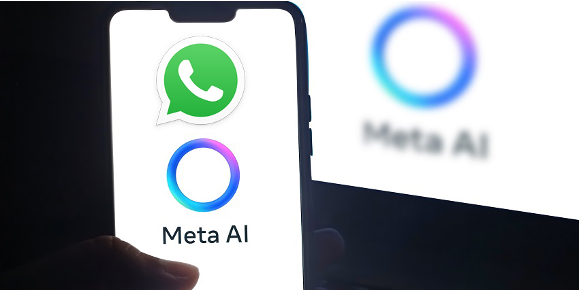
However, in October 2025, Meta introduced a new policy through an update to WhatsApp’s terms and conditions for business users, specifically the ‘WhatsApp Business Application Programming Interface terms.’ Under this update, AI providers are prohibited from using the ‘WhatsApp Business Solution’, the tool that facilitates business-to-consumer communications, when AI constitutes the primary service offered. Businesses may continue to use AI tools for ancillary or support functions, such as automated customer support offered via WhatsApp, but not where the AI service is the main product being delivered to end users. According to the updated terms, the restrictions apply immediately (from 15 October 2025) to AI providers newly joining WhatsApp, while existing AI providers will need to comply on 15 January 2026.
As a result, competing AI providers may be prevented from reaching customers through WhatsApp, while Meta’s own AI assistant, ‘Meta AI’, remains accessible to users on the platform.
The Commission is concerned that this new policy could restrict third-party AI providers from offering their services via WhatsApp. It has opened an antitrust investigation to assess whether Meta’s policy may constitute an abuse of dominance under Article 102 TFEU. As EU antitrust chief Teresa Ribera stated, the move aims to prevent dominant firms from ‘abusing their power to crowd out innovative competitors’.
Recalling recent EU enforcement practice, it is perhaps unsurprising that the Italian Competition Authority (AGCM) opened an investigation in July 2025 into allegations that Meta leveraged its market power by integrating its AI tool into WhatsApp. The AGCM subsequently expanded its investigation in November to examine whether Meta further abused its dominance by blocking AI competitors from accessing WhatsApp, with potential for interim action. In this context, it appears that the Commission’s response has lagged behind that of the member states.
Not on the Sidelines – The DMA’s Role in Cloud Market Investigations
Alongside the two antitrust investigations into AI services, the Commission has announced three market investigations into cloud computing services under the DMA. These inquiries are closely linked to the AI sector, as cloud computing resources are widely recognized as essential infrastructure for AI development. Cloud services form the backbone of AI development, and ensuring a fair and contestable cloud market is crucial to fostering innovation and supporting Europe’s strategic autonomy. Accordingly, this blog brings these practices together to provide a comprehensive overview of the Commission’s recent enforcement efforts in the AI sector.
On 18 November, the Commission announced the opening of three market investigations into cloud computing services under the DMA. Two of these investigations aim to assess whether Amazon and Microsoft should be designated as gatekeepers for their cloud computing services, Amazon Web Services (AWS) and Microsoft Azure, under the DMA, even though they do not meet the DMA’s quantitative thresholds (Article 3(2)) for size, user number, and market position. In other words, the Commission seeks to assess whether they act as important gateways between businesses and consumers and can be designated under the qualitative thresholds outlined in Article 3(8) DMA.
Analyses of cloud markets conducted in recent years indicate that Microsoft Azure and Amazon Web Services occupy very strong positions in relation to businesses and consumers. Previous research by the author reveals that in the third quarter of 2024, AWS held 31 per cent of the market share, Microsoft Azure had 20 per cent, and Google Cloud accounted for 10 per cent of the global cloud infrastructure market. Together, these ‘Big Three’ account for more than 60 per cent of the global cloud market, with the remaining competitors holding only a small share in the low single digits. As shown in our previous blog post, European providers combined (e.g. SAP, Deutsche Telekom, OVHCloud, Scaleway) make up just 15 per cent of the market. It can be concluded that the market is mainly split between AWS and Azure. This likely explains why Google Cloud is not included in the newly announced investigations. Certain structural features of the cloud sector may further reinforce the position of AWS and Azure.

In this context, the Commission plans to investigate whether AWS and Azure qualify as important gateways under the DMA. If so, these cloud services would be added to the list of core platform services for the designated gatekeepers, their cloud computing services.
The third investigation focuses on the DMA’s broader application to cloud markets, particularly examining whether the current obligations effectively address practices that may limit competitiveness or constitute unfair behaviour. It will cover, for instance, obstacles to interoperability between cloud computing services, limited or conditioned access for business users to data, tying and bundling services, and potentially imbalanced contractual terms.
These market investigations underscore the Commission’s recognition of cloud computing as a foundational element of the AI ecosystem and its commitment to ensuring a fair, open, and competitive cloud market in Europe.
The DMA and Antitrust Law: Complementary Role Stamped Again, but is Ex Ante Regulation Falling Short?
The overview of these five ongoing investigations highlights once gain the complementary roles of the DMA and the EU competition law in regulating digital competition. At the same time, these developments may also raise the concerns about the sufficiency of the DMA in addressing emerging digital challenges, particularly in the AI sector.
The SCiDA team contributed a report to the DMA consultation in September, stressing that the need to ensure covering AI services and enforcing Cloud services under the DMA. However, the DMA in its current framework shows certain structural limitations. Specifically, AI related services, such as Google AI Overview and Meta AI, are not listed as categories of core platform services (CPS) under Article 2(2) DMA. This omission makes the DMA difficult to apply directly to these services, even when they demonstrably affect market access, data usage, or competitive dynamics. Furthermore, Article 3 is primarily designed for multi-sided platforms rather than direct-to-users digital services, making it difficult to apply to these emerging service categories. This designation framework is explicitly different from the UK’s Digital Markets, Competition and Consumers Act 2024 (DMCCA), which provides the Competition and Markets Authority (CMA) with greater flexibility in designation procedures. This difference is already visible in recent practice: under the DMCCA, the CMA designated Google Search with Strategic Market Status (SMS) and explicitly included AI Overview within the scope of that designation.
Despite these gaps, the Commission could still pursue DMA enforcement regarding the integration of AI services into gatekeepers’ CPSs. Both Meta AI and Google AI Overview are embedded within designated core platform services, Meta WhatsApp and Google Search, meaning that the obligations under Articles 5, 6 and 7 DMA should, in principle, also apply to these CPSs and the AI features integrated into them. However, the current list of obligations is not well suited to address the practices at issue. For example, while Article 6(12) on FRAND access could appear relevant to WhatsApp’s policy on AI providers, this provision applies only to three types of CPSs: software application stores, online search engines, and online social networking services. WhatsApp, by contrast, has been designated as a number-independent interpersonal communications service, and therefore falls outside the scope of Article 6(12).
Regarding Google’s AI Overview and AI Mode, even if publishers’ and creators’ content is understood as data used for AI training, the DMA current imposes no specific obligations addressing this type of data use. Alternatively, if Google’s conduct were characterised as a form of self-preference, leveraging its dominant position to force business users to grant access to their data, Article 6(5) would still offer limited support. This provision targets preferential ranking and related indexing and crawling practices, but does not extend to the upstream use of third-party content for training purposes. Notably, the profit distribution between gatekeepers and content providers, such as publishers and YouTube creators, is also not addressed by the DMA.
Even with cloud computing services explicitly listed as a category of CPSs under Article 2(2)(i), the DMA still lacks specific obligations that could meaningfully be imposed on AWS and Azure. This gap shows why the Commission launched a third investigation to assess whether the DMA can effectively address practices that may limit competitiveness and fairness in the EU cloud computing sector.
Overall, in the absence of ex ante regulation – namely the DMA – effectively protecting the ‘front door’ of AI competition, antitrust enforcement has been brought to the forefront to ensure that AI markets become fair and contestable.