
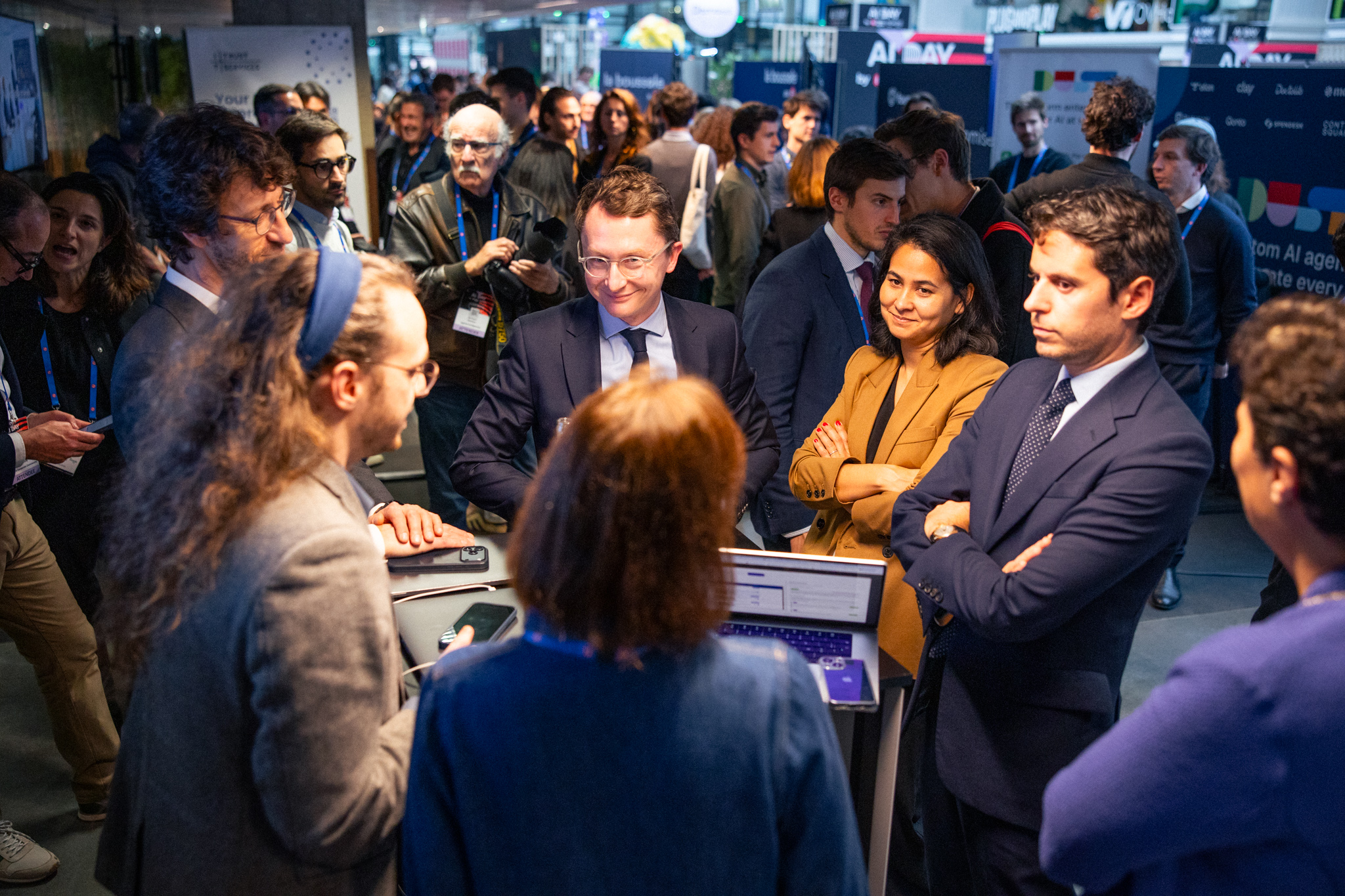
AI innovation does not arise from political reunions, but from incubators, co-working spaces and research labs. So, what better place to visit than the AI Day by Europe’s largest tech startup association, to understand where Europe’s AI innovation is headed. On 10 February 2026, France Digitale brought together over 2.500 tech and AI leaders in Station F in Paris – “a lighthouse for AI startups all over Europe”. Sefqan Bendes & Sebastian Steinert joined to find out how sovereignty and digital regulation play out in Europe’s quest of catching up in the AI race. Yann LeCun, Anne Bouverot and Thomas Jarzombek are just a few of the names they encountered during the conference. Can you guess who recently got into vibe-coding video games with their son? Find out everything about Paris AI Day 2026 in our conference debriefing.
Sefqan Bendes & Sebastian Steinert
Station F – For Furthering Frontiers
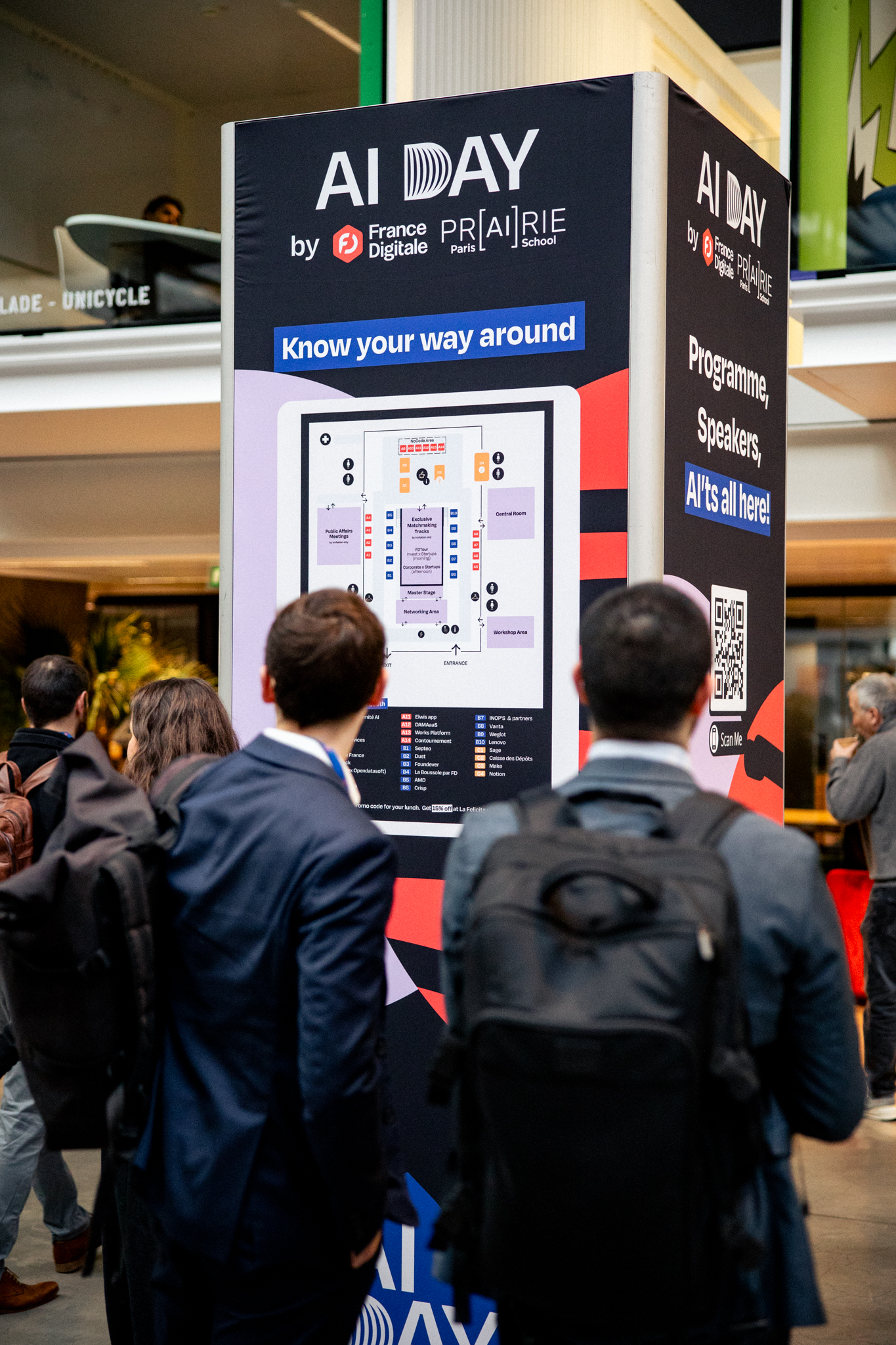
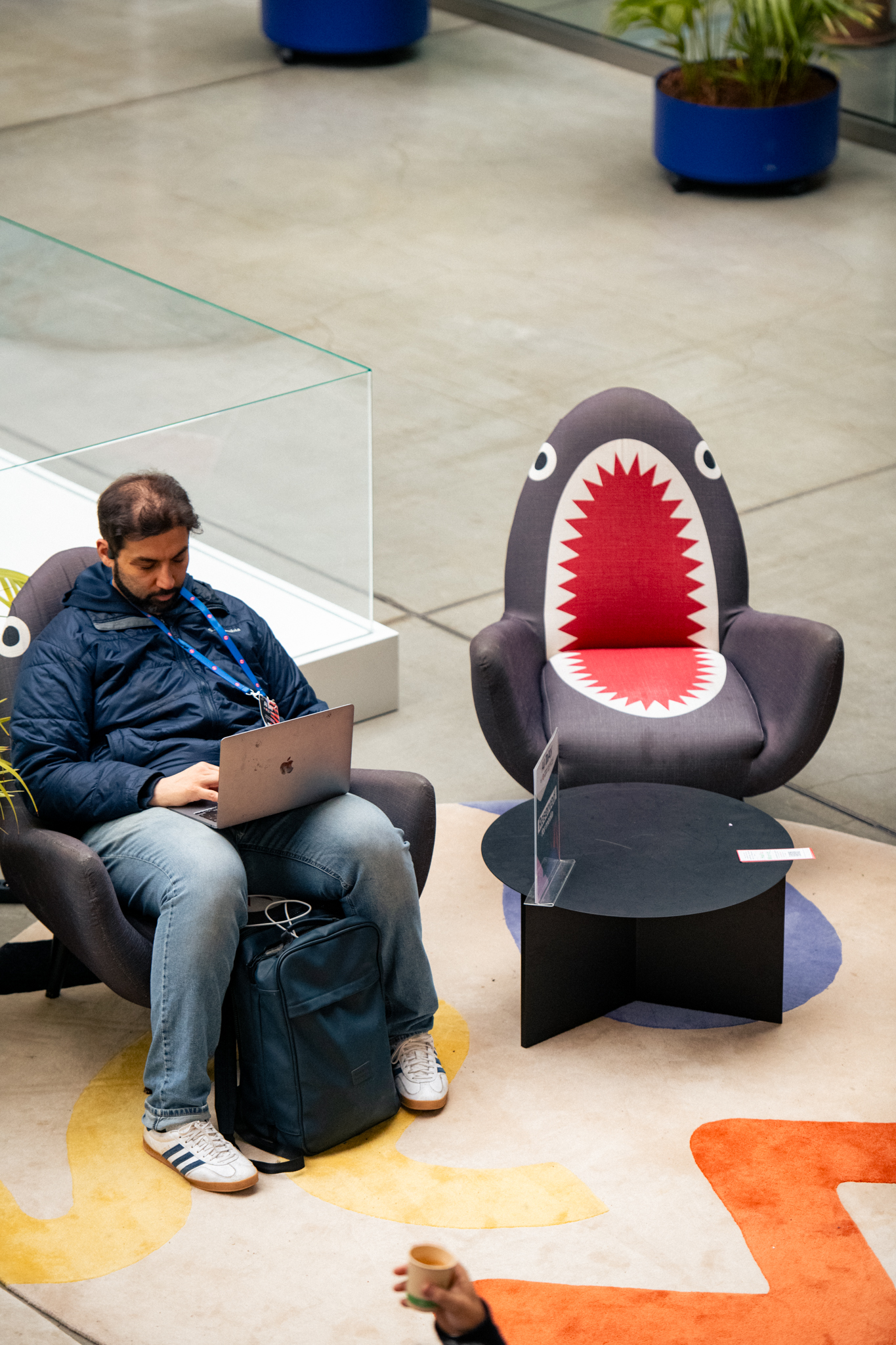
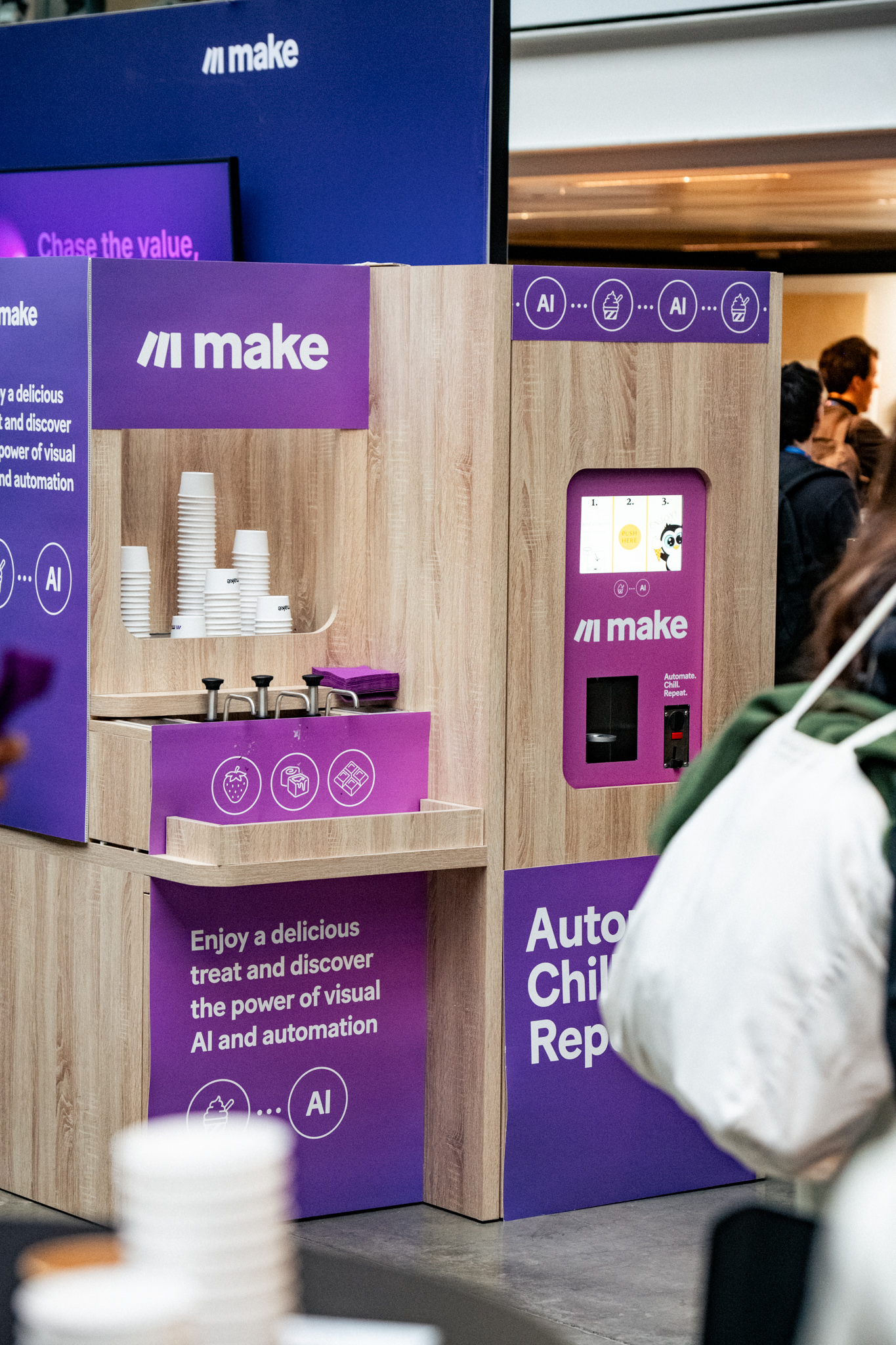
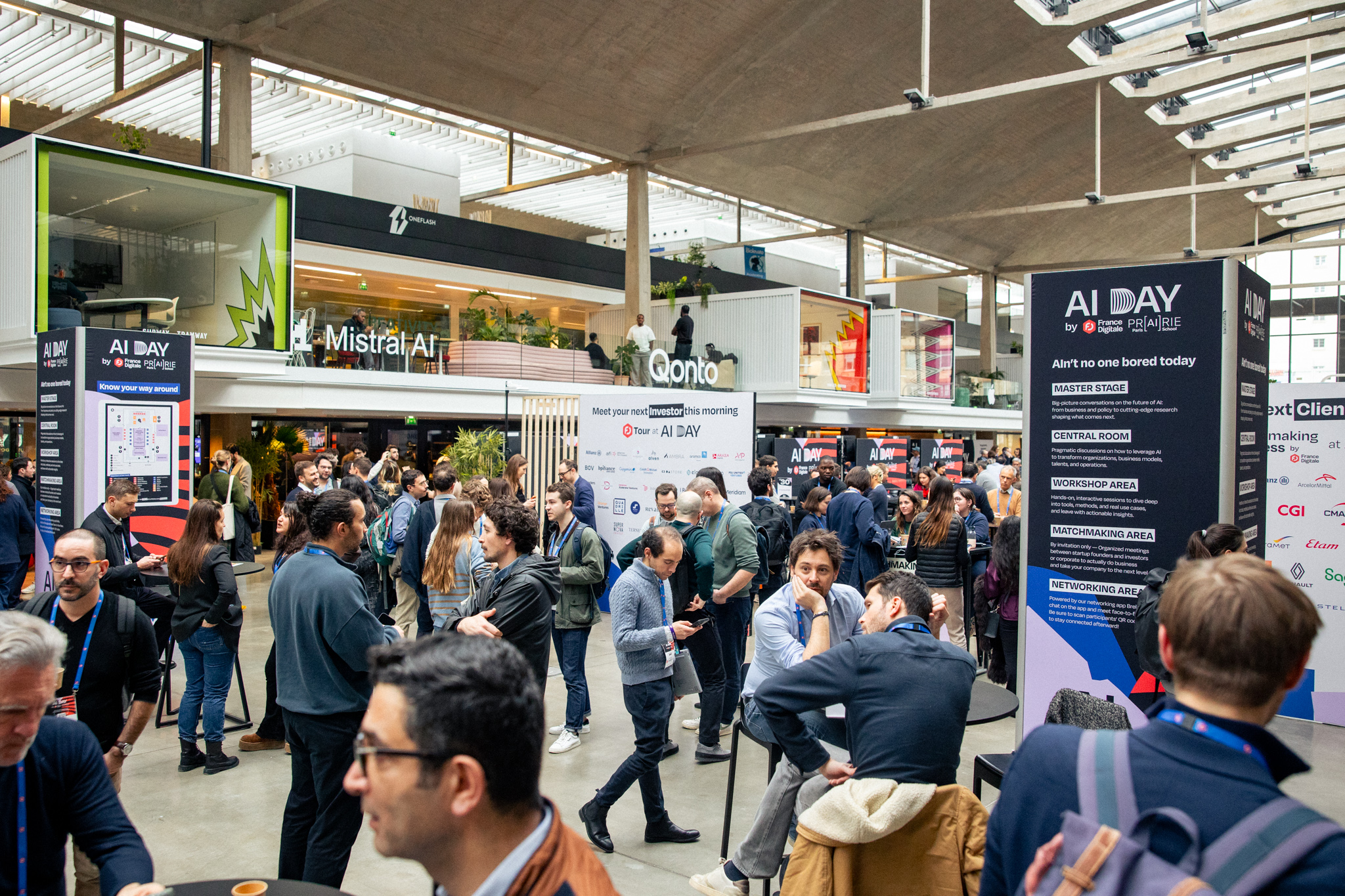
Today’s mission was clear: Find out what AI researchers, startups and investors really think about current AI developments. There didn’t seem to be a better place than Station F, one of the biggest innovation campuses in the world. Every corner breathed the startup air: arcade machines, demo stands, containers as meeting rooms, art exhibitions and our personal favorite – AI ice cream. And the startup crowd preached their AI utopia, wearing t-shirts that read, “I can be here, because AI is doing my job”.
The program spanned more than 30 sessions covering the big questions of European Sovereignty and AI leadership, as well as practical business advice on integrating AI agents in workflows and how to foster an innovation culture within firms. Our focus was on the bigger picture: What is the competitive state of the AI market? How can the AI ecosystems be supported? And what does all this mean for European sovereignty?
No Digital Sovereignty without European Clouds
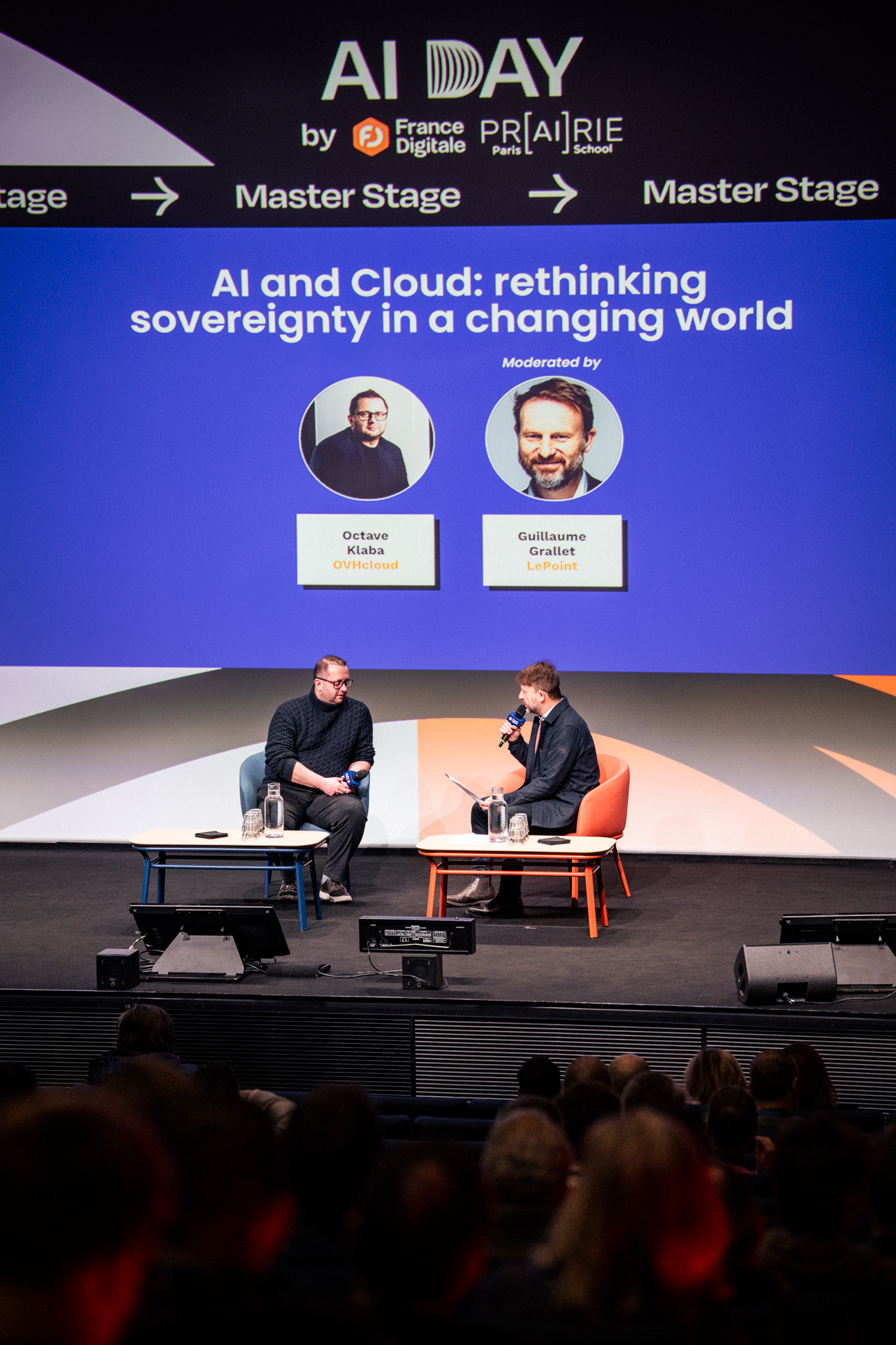
“Without sovereignty, you lose control over the economy”, Octave Klaba, CEO of OVHcloud, proclaimed on the first panel moderated by Guillaume Grallet, Editor-in-Chief for Le Point. Klaba differentiated between three kinds of sovereignty: data sovereignty, technological sovereignty and operational sovereignty. Europe needs all three in order to be truly sovereign. However, the lack of trust from governing bodies in European solutions is working counter-productively; it’s fueling foreign hyperscalers instead of supporting EU tech, Klaba found. So far, European cloud providers like OVHcloud and Deutsche Telekom only account for 15 % of the European market, while AWS, Azure and Google Cloud capture 70 %. Klaba’s greatest pain-point is intra-European fragmentation and the difficulty of scaling into other countries. A topic which was brought up continuously by different stakeholders throughout the day.
Klaba appeared as a great warrior for competitive markets. For too long European politicians were obsessed with individual champions, he argued: “We don’t need one European champion, but different successful players across Europe”. But how to achieve a competitive and sovereign European cloud market? The Open Markets Institute might be of help, they just published their report “Taming the hyperscalers” as a blueprint.
Digital sovereignty remained a top priority at the conference. For Anne Bouverot, Special Envoy of the French President for AI, the weak European presence in the world’s most notable AI models is worrying. Bouverot warned that this is not only a risk for the economy but also for democracy and national security.
The AI Bubble that Never Really Pops?
AI is a bubble, but still, no one can afford not to invest in AI. That’s how Daphné Leprince-Ringuet (Sifted) opened the next panel discussion with a group of investors, who invest at any stage from pre-seed to growth funding. It went right into the big money questions: How do you invest in AI successfully?
Cyril Bertrand, CEO of XAnge, has a clear strategy: If AI is the product, invest everything necessary to beat the pricing of American and British funds. If AI is operational to the product, be rational. For the latter, carefulness is required, because software companies implementing AI solutions always risk that their solutions are directly integrated by the big LLM providers. Anthropic’s release of Claude Cowork at the beginning of February sent shockwaves through the SaaS scene and valuations dropped by nearly 300 billion dollars: a true “SaaSpocalypse”. Even though, according to Xavier Lazarus (Elaia), Anthropic “did not have a real breakthrough, they just showed that they could do it much cheaper”. The sentiment still stands: “Everybody should be a bit nervous”. If a startup builds a solution on ChatGPT and Co. it risks falling back in the “e-commerce trap” of the 2010s, were the upstream providers like Google and Meta took up all the margin, Lazarus warned. In that sense, AI is a bubble, explained growth investor Hala Fadel (Eurazeo) because company entry and exit is happening at an unprecedented speed. In terms of long-term value creation, however, AI technology is not a bubble at all, she added. Against the current market volatility, Merete Clausen (European Investment Fund, EIF) wants to ensure a sustainable build-up of capacity throughout the sector. As an institutional investor they focus on Europe’s strength, such as health, industrial automation and clean energy. But EIF has also increased their risk-taking appetite to fuel disruptive tech which Europe would otherwise lose to the USA and China.
Finding the European Path towards AI Leadership
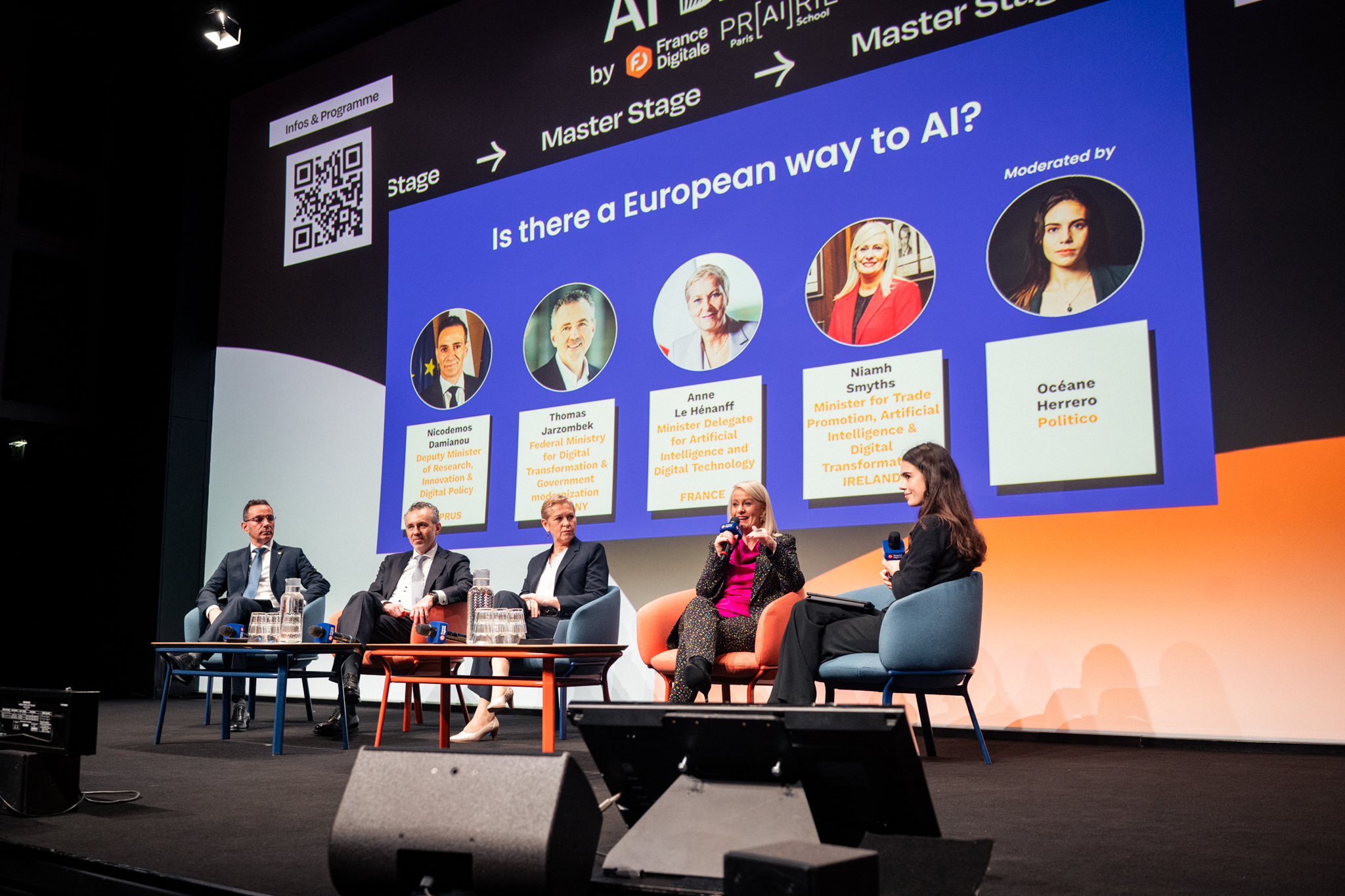
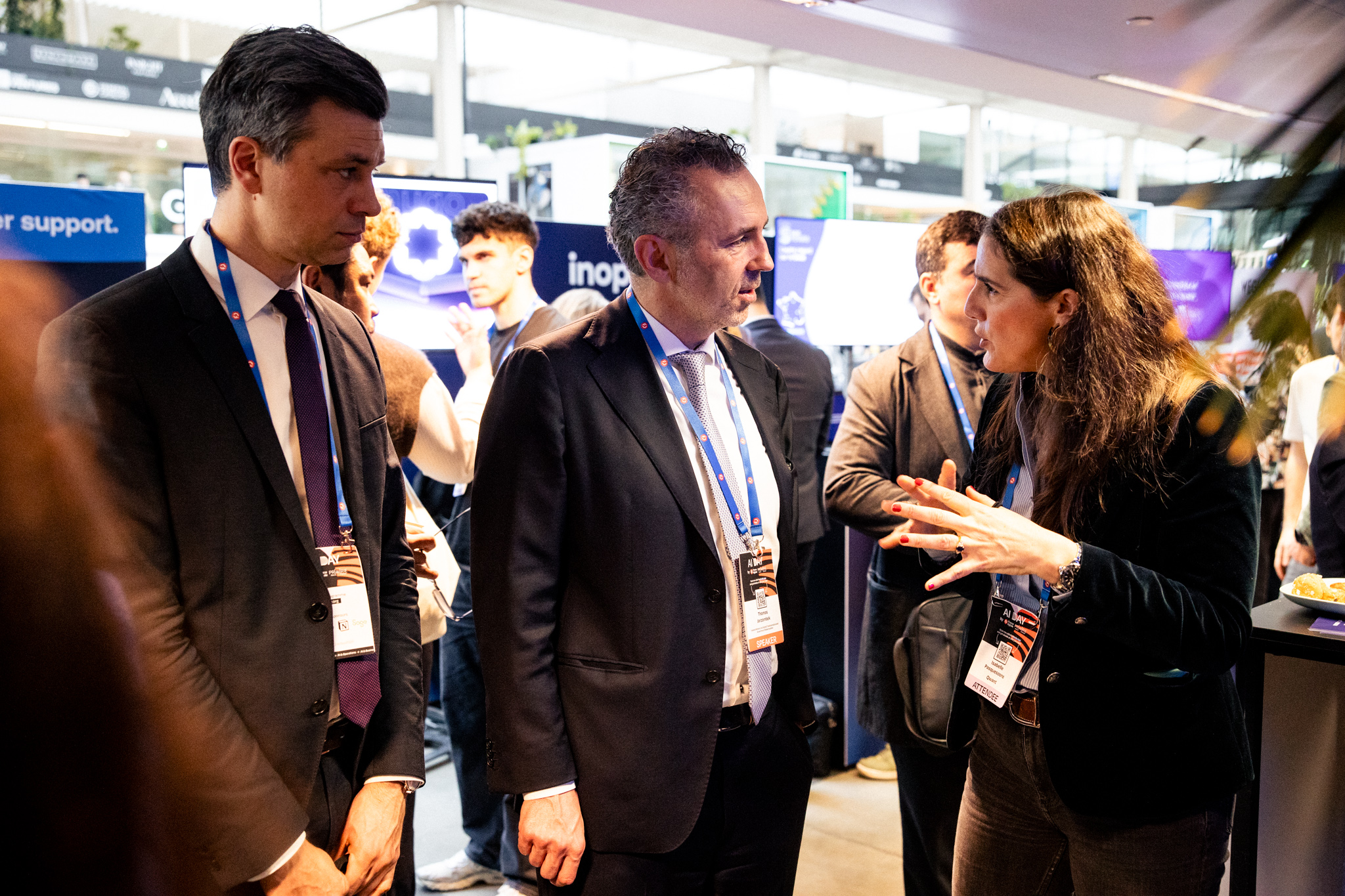
Next on stage: European policy makers discussing ways forward for European AI. Is Europe too obsessed with regulation? Thomas Jarzombek (State Secretary at the German Ministry for Digital Transformation & Government Modernization) declared that a baseline level of regulation is important, but now simplification is key. Anne Le Hénanff (French Minister Delegate for Artificial Intelligence and Digital Affairs) argued that Europeans can be proud of their rules. Companies need to respect them and the AI Act has increased trust in AI. Regulation that fosters human-centered and trustworthy AI, will even be Europe’s competitive advantage, assured Nicodemos Damianou (Cyprian Deputy Minister of Research, Innovation & Digital Policy). Niamh Smyth (Irish Minister for Trade Promotion) agreed and explained that startups see European regulation as the gold standard, standards that we are glad to have in times of Grok creating non-consensual sexualized images.
At the last AI Action Summit in 2025 (see our blog post), President Macron stated that the next five years would be crucial for AI in Europe. Thomas Jarzombek shares the urgency. Five years even seem too generous to him. Nicodemos Damianou added “The name of the game is: speed.” He also shared the sentiment of the first panel: Europe needs many champions and diverse ecosystems.
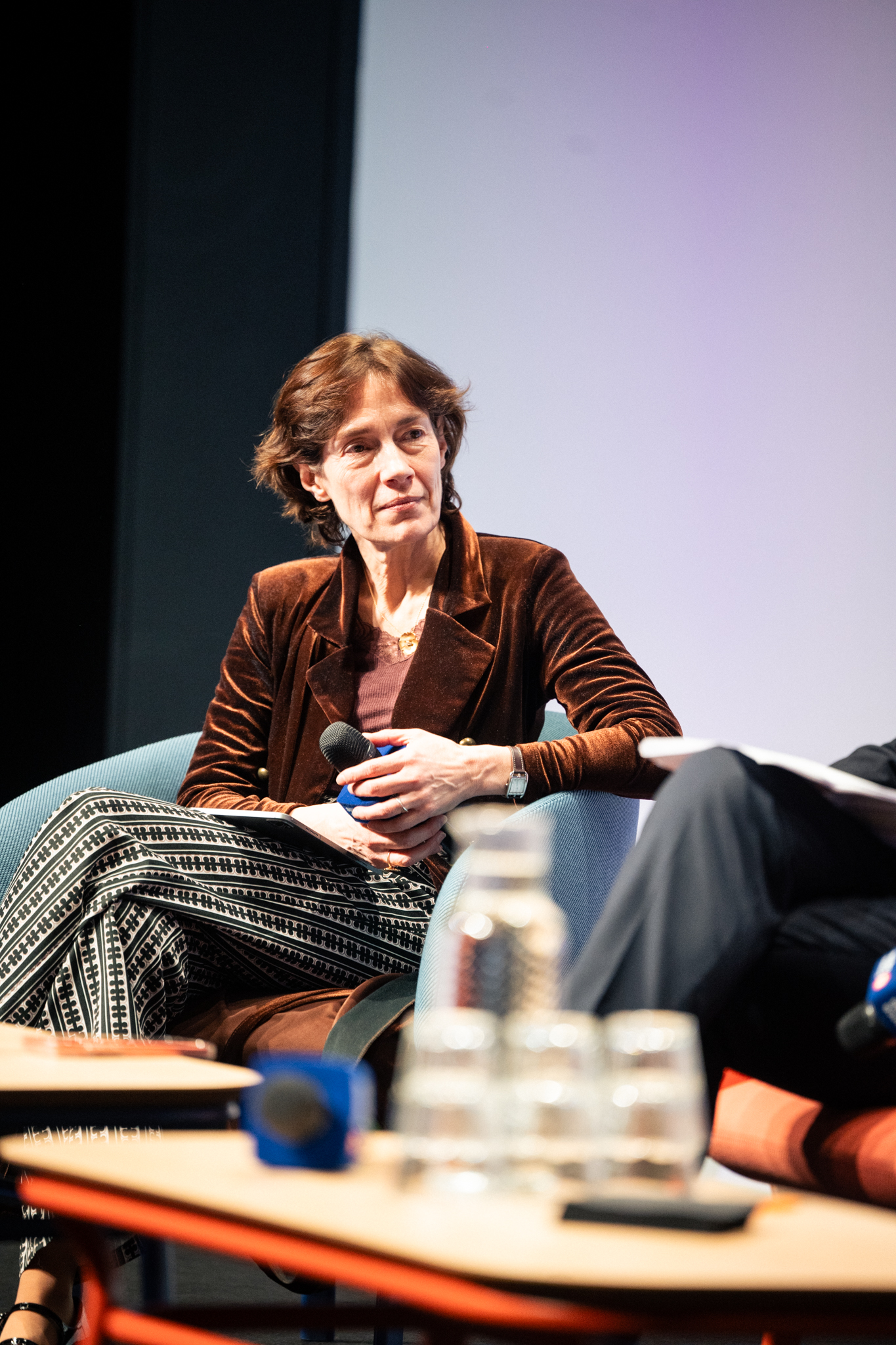
So, there is agreement on the goals of European AI progress, but not entirely on how to achieve it. France is pushing for European Preference in public procurement, while Germany is focused on deregulation. At the informal European leaders’ summit on 12 February in a Belgian castle, the European preference was one of the hot topics discussed. France has already found a supporter in Ursula von der Leyen, but industry representatives warn of “risks to healthy supply chains”. Anne Le Hénanff, at least, showed her unbroken conviction on stage: “We will succeed. Because we don’t have a choice, in fact.”
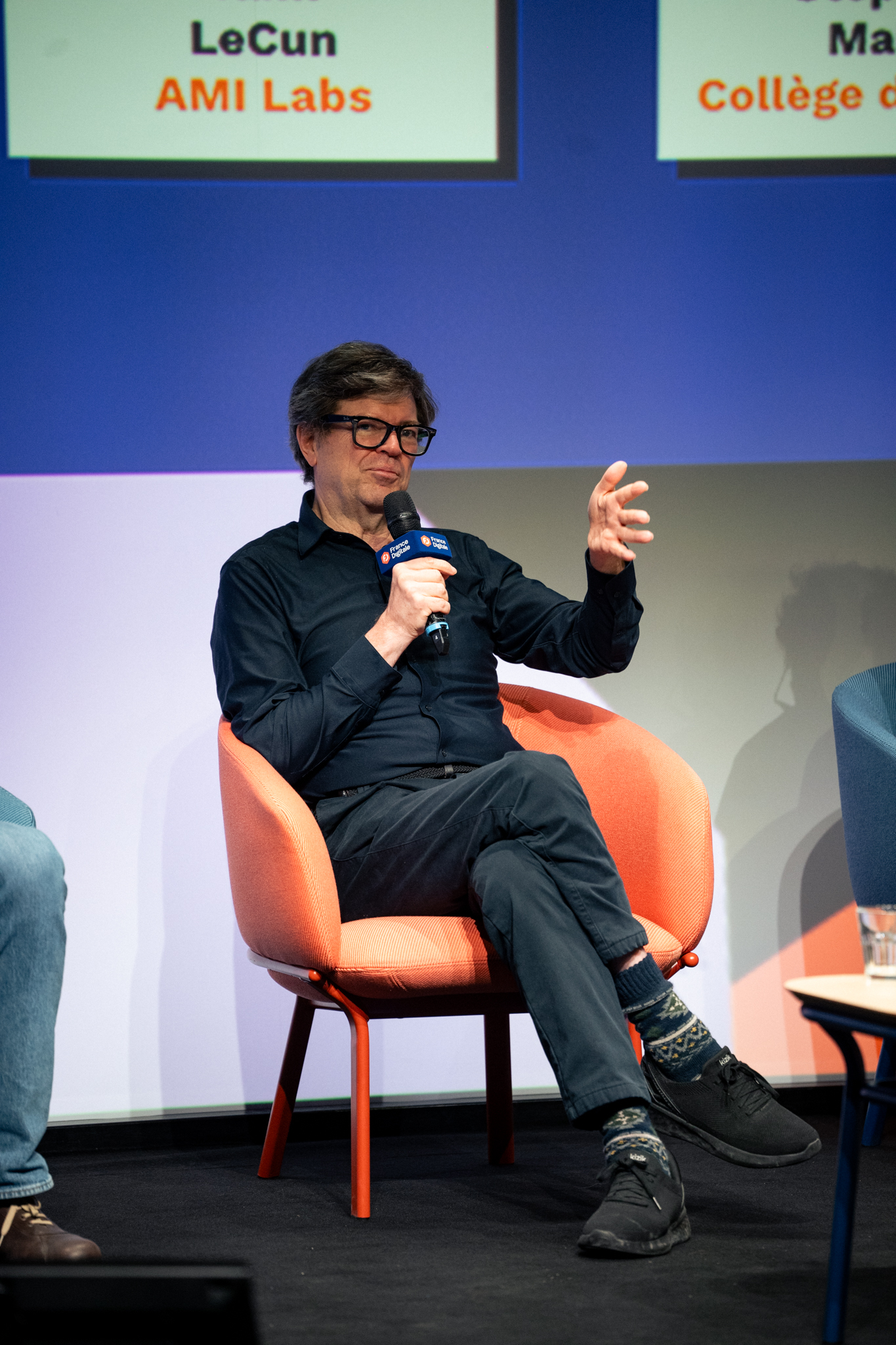
Another shared sentiment was the necessity of AI adoption in European companies and public institutions. This, however, raises questions for European sovereignty: Does boosting AI adoption make Europeans more dependent? In France, 60 % of active AI users resort to ChatGPT and only 6 % to Mistral. What good would it bring to achieve adoptions upwards of 90 %? For Anne Bouverot, the answer is clear: there is no alternative to AI adoption for reasons of productivity. We should become leaders in adopting faster, but at the same time work on becoming leaders in AI development. We should not only focus on LLMs but turn our research and investment to frontier AI. Seeing Turing prize winner, Yann LeCun, returning from Meta to Europe to found Ami Labs and work on “world models” is a hopeful sign.
German Thomas Jarzombek seems to have taken AI adoption very seriously: Together with his 11-year-old son he got into vibe-coding and created a video game over the weekend. Let’s hope that his son’s requests to make the boss more villainous refer only to video games.
Quick Learnings: AI and…
- Work: Jean-Pierre Farandou (French Minister of Labor and Solidarity) did not beat around the bushes: AI will be a part of every industry, it will wipe out some jobs, but we will see the positive side of it. The digital communications company Cisco is pushing to have 100% of its product code written by AI, which allows its coders to work on a more strategic level. The dream of having AI do the work and humans enjoy life, seems, however, unrealistic in the moment. A recent study by Berkeley researchers showed that for now, AI does not reduce work for employees, but rather increases it.
- Research: Co-organizer of the conference was PR[AI]RIE, an Interdisciplinary Institute for AI brought to life by France’s 2018 AI Strategy in order to strengthen AI research and talents in France. Its representatives stressed how AI is not a side topic, but at the core of every activity. All institutions are involved in the innovation of AI. Holistic and interdisciplinary research and integration is of upmost importance. Lucie Finet, from Mission French Tech, highlighted the close cooperation between startups and research as one of the main advantages of the French AI ecosystem.
- Education: Justine Cassell (Inria) demonstrated how Virtual Peers can be used to optimize learning for peers. Virtual Peers are Agents used as learning partners and aim to assist learning. In most cases, real peers are favorable but in special cases those are not available. Virtual Peers can assist learning as long as they are based on a deep understanding of people.
- Sustainability: Sustainable AI can be a competitive advantage. Even though AI only produces 3 % of emission in France, there are predictions of that number doubling or tripling in the near future. AI siperstar Yann LeCun does not seem worried about AI energy consumption: given the strong economic incentives to reduce costly energy consumption, competition on AI markets will sort the problem out, he thinks.
Squashing Fragmentation on the Front Line
AI and robotics have long entered the defense sector. Under the premise of protecting sovereignty, a panel with Antoine Bordes (Helsing) and defense tech investor Sandra Budimir (Expansion Ventures) argued that device autonomy becomes increasingly important. In order to streamline the process of AI implementation in defense, it needs to be a part of the development and integration process from day one. Fragmentation and lack of standardization across the EU was named the biggest bottleneck for usage of AI in defense and robotics. There are only patchworks of standardization, e.g. one state or one product. Unification and standardization need to be accompanied by modularity. Components, especially AI systems, need to be interchangeable.
Confidence of information was another important talking point. Defense information is sensible and extremely crucial for a nation’s safety. So, how do defense companies manage confidentiality and open research? Generally, it goes like this: research starts open. Then, when something specific needs to be worked on, spin-offs are made and research is closed.
The biggest investment for robotics lies in the demand to be sovereign and the progress towards automation. Currently, human work is overwhelmingly needed to operate devices. The panel’s hope is that with more automation this work reduces and building true robots becomes increasingly possible. As of now, truly automated use cases are very restricted, and missions mostly cannot be done without involvement and oversight of humans.
Does AI care?
In the health care sector, the good, the bad and the ugly of AI is especially potent. Using AI can accelerate processes in every step of the value chain. Simultaneously, AI can assist physicians which have to master the complexity of the 21st century. The panel argued that empowered physicians need the help of algorithms, as those algorithms not only compile data but, in many cases, even create it.
Having said all this, it is not easy to precisely measure the return on investment in the health sector. Firstly, the measuring stick is unclear. What exactly constitutes a return on investment when dealing with health? Secondly, there are practical problems of conducting clinical studies, which can properly determine the effects of AI in clinical work over long periods of time.
The panel also discussed the Health Data Regulation which grants researchers the right to obtain pseudonymized health data. Does this piece of legislation hinder or accelerate innovation? On the one hand, the regulation sets a clear procedure: access to data must be granted within three months, “otherwise: fines”. During the COVID pandemic, researchers were often denied access to health data and had to wait for months or even years just to be denied. On the other hand, those kinds of obligations have the potential to instill fear and thus slow down innovation. Also, even if that doesn’t happen, there is still the threat of the data mostly being used in the USA and China – an argument that was also made during debates of cloud and sovereignty.
Where is the trust?
One of the last panels dealt with truth in the age of AI. Alexandru Lăpușan (Romanian Business Leader) talked about the elections in Romania. The last presidential elections were annulled due to alleged Russian interference though cyberattacks and online campaigning with bots and misinformation. Lăpușan said, Romania dodged a bullet. In Romania only 12 % of Romanians would trust other Romanians, making misinformation campaigns extremely potent. Lăpușan warned that similar low trust scores and similar electoral problems could occur in other nations, even in France. He also talked about a particularly absurd campaign in which Romanians were led to believe that French people are stealing water from Romania which increased skepticism against France.
Melisa Basol (Pulse) talked about how resilience against misinformation can be built. The Inoculation Theory describes something akin to vaccines, “which we hope everybody believes work”. Through exposure to misinformation and misinformation tactics, competence and foresight against those practices can be developed. She also presented a project in which over ten thousand participants unknowingly had deep fakes of their voices created and thus were confronted by the technical capabilities to create false narratives.
Jordan Ricker (opsci.ai) explained the difficulties of defeating misinformation. Fact checking can decrease reach but only in limited scale of single-digit percentages. It is not nothing but far from a sufficient solution. In this use case, AI can enhance the work of analyst and fact checkers. AI can also make it possible to detect crimes extremely efficiently e.g. by scanning massive numbers of pictures or other evidence.
The panel also discussed how misinformation tries to invoke emotions and how sharing false information – even through disclaimers of misinformation – can make it more salient. Furthermore, the average user doesn’t interact with data on the basis of veracity but on the basis of conveyed feelings, which makes resistance more difficult. A word of advice by Lăpușan : “Whenever you rush to publish something: Stop. Because they pushed the right buttons”.
What to Learn from the French AI Startup Ecosystem?
After a day immersed in the French AI startup ecosystem, we return to Düsseldorf with suitcases full of ideas, impressions, and reflections on Europe’s quest to keep pace in the global AI race. As Pascal Cagni from Business France put it: “AI is our last chance, and we need to embrace it. Macron has understood this.” Since the Franco-German Sovereignty Summit in November 2025, the importance of digital sovereignty as a driver for AI and cloud development appears to have grown even stronger.
The question of whether Europe needs a preference for EU tech in public procurement remains open and will be debated at the highest political levels. At the same time, familiar but critical levers for European innovation must not be overlooked: reducing fragmentation within the single market and ensuring the steady flow of investment. As long as startups cannot scale their business seamlessly across the EU, the risk of an exit beyond Europe’s borders remains high. Anne Bouverot, captured this challenge succinctly: “We have the talent, the compute, the data, the market. We just need to operationalize it better.”
What we take from Paris above all is a strong sense of determination. The participants we met do not see themselves as followers, but as future leaders in AI. The startup scene is energetic and ambitious, supported by visible political backing from President Macron. France’s centralism around Paris was frequently highlighted as an advantage.
Geopolitical uncertainty in the US combined with Europe’s growing focus on digital sovereignty may help draw AI talents back to Europe. Still, this alone will not be enough. Policymakers across Europe will need to respond to the calls from startups and researchers to truly nurture a competitive and sustainable AI ecosystem.
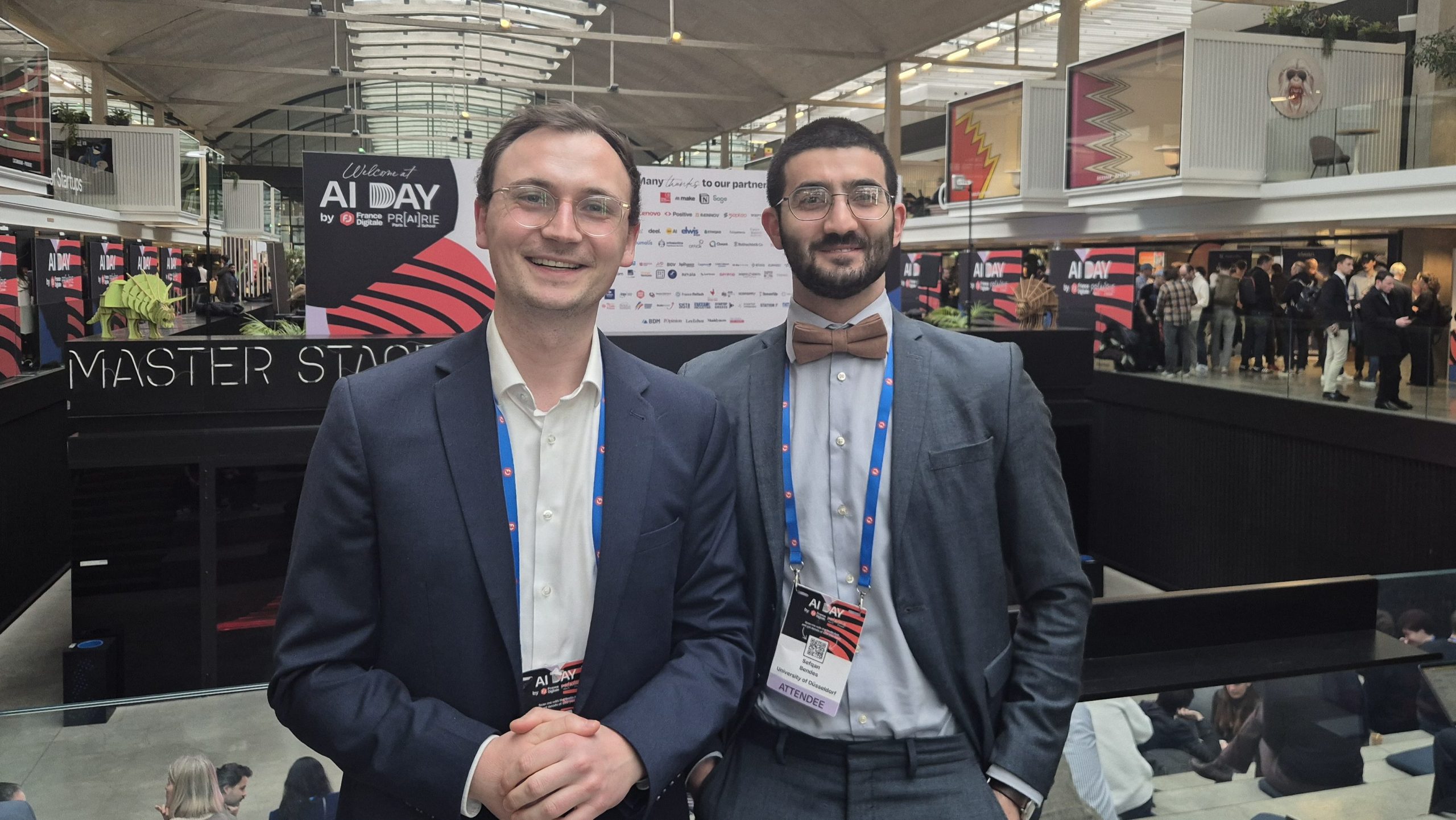
Sefqan Bendes and Sebastian Steinerts are researchers and PhD candidates at the chair of SCiDA co-lead Prof. Dr. Rupprecht Podszun at Heinrich-Heine-University Düsseldorf. They are also involved in the work of the Expert Commission on Competition and AI of the German Ministry for Economy and Energy. For more information on this Commission see here.
Pictures by David Arous.

Really thorough debriefing — the tension between boosting AI adoption rates and maintaining sovereignty over which models get adopted is something I hadn’t considered as deeply before reading this. The stat about 60% of French AI users defaulting to ChatGPT vs 6% to Mistral is striking and probably mirrors most countries’ adoption patterns.
One angle worth exploring alongside the enterprise and defense use cases discussed here is how AI adoption is playing out in traditionally low-tech industries like food service and hospitality. These sectors represent millions of small businesses that could benefit enormously from practical AI applications (phone handling, reservation management, customer communication) but they’re rarely part of the sovereignty conversation. I came across a useful overview of where that space is heading: https://www.ringfoods.com/blog/the-complete-guide-to-ai-phone-answering-for-restaurants-in-2026 — it gives a sense of how granular and industry-specific the adoption question actually gets when you move beyond LLMs and cloud infrastructure.
The point about fragmentation being the biggest bottleneck resonates across every sector, not just defense robotics. Small businesses trying to adopt AI tools face their own version of fragmentation — different integrations, no standardization, incompatible systems. Would be interesting to see SCiDA examine that layer of the adoption challenge as well.