
The third annual TL4 UK Competition Law Summit, held on 18 June 2026 at Carpenters’ Hall in London, offered a useful stocktake of where UK competition policy now sits, eighteen months into the operation of the Digital Markets, Competition and Consumers Act (DMCCA) and at a moment when the CMA’s institutional posture has shifted markedly. Chaired by Ali Nikpay, the conference brought together regulators, sector specialists, in house counsel and economists across several panels, ranging from the CMA’s pro-growth agenda through market investigations, merger control, sectoral regulatory coordination, consumer enforcement, private litigation and digital markets. Taken together, the day’s discussions point to a regulator recalibrating its enforcement posture under political and economic pressure, even as the digital markets regime it administers continues to bed in.
by Anush Ganesh
The pro-growth mandate and a quietly contracting caseload
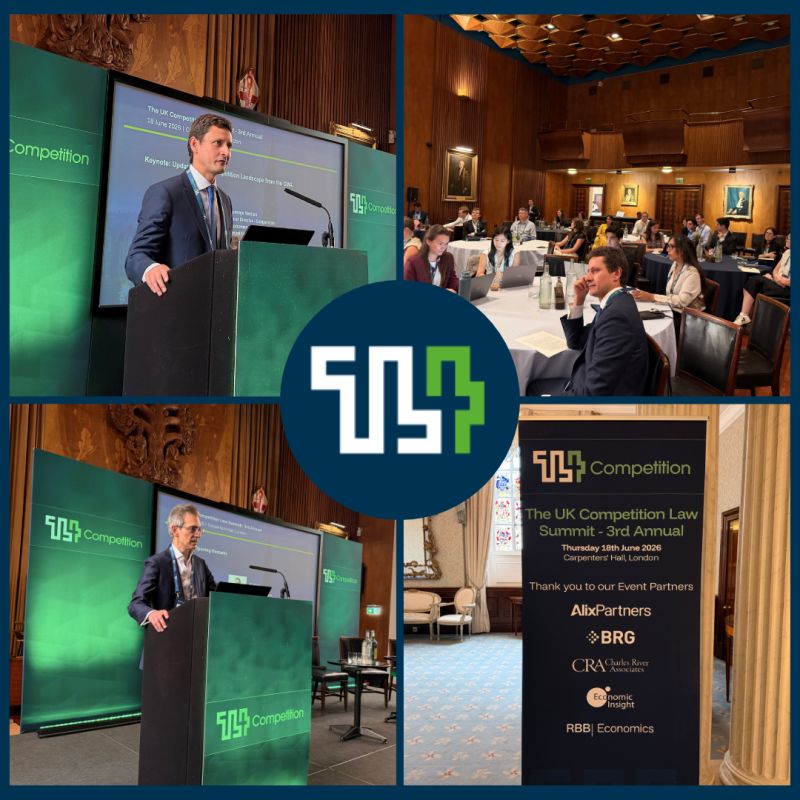
The opening keynote, delivered by Lourenço Ventura, Senior Director of Competition Enforcement at the CMA, set the tone for much of what followed. The emphasis on collaboration with regulated sectors, on the CMA’s role in enabling rather than simply policing legitimate business activity, and on the proportion of enforcement cases resolved through leniency, signalled an institution keen to be seen as a partner to growth rather than an obstacle to it. The improved coordination with the European Commission described in the keynote was also a notable point for anyone tracking the relationship between UK and EU competition regimes.
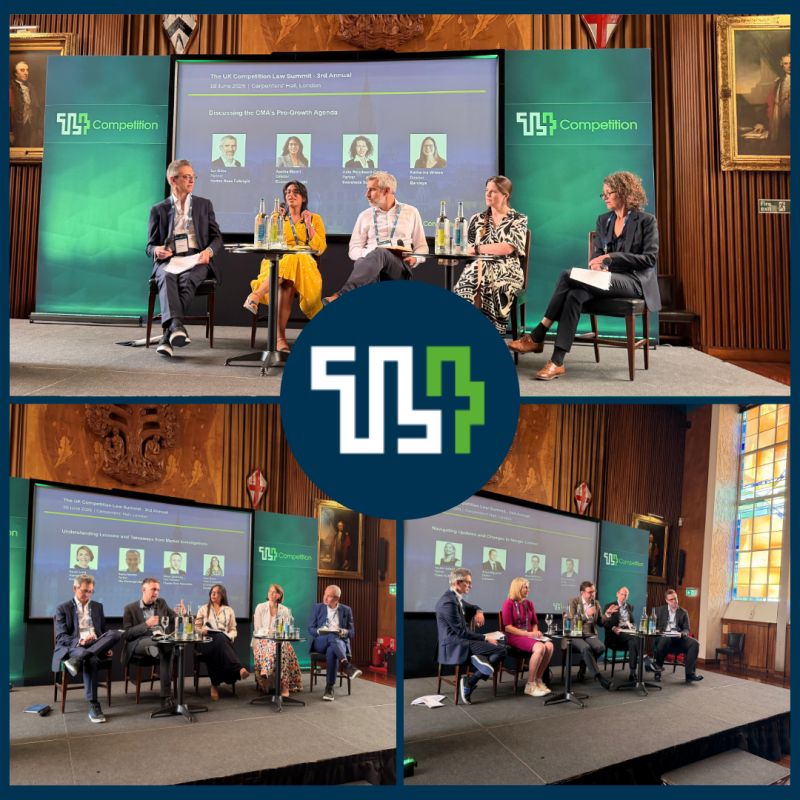
The first panel, comprising Ian Giles of Norton Rose Fulbright, Julia Woodward-Carlton of Eversheds Sutherland, Aastha Mantri of Economic Insight and Katharine Wilson of Barclays, with Ali Nikpay opening the discussion, pressed on what this growth mandate actually means in practice. One observation, that Chapter 1 and Chapter 2 cases under the Competition Act 1998 remain the bedrock of competition enforcement, set against a clearly declining trend in new case openings, was a striking data point. It suggests that the growth agenda is not merely rhetorical reframing but is correlating with a genuine contraction in enforcement volume. A related characterisation made by speakers of the CMA as having become something of a thought leader through its publications, rather than primarily a prosecutorial body, fits with this picture. Comments from the in-house perspective welcomed the forthcoming DBT review of remedies and the CMA’s evident effort to engage constructively with business, reinforcing the sense that the tenor of UK competition enforcement has shifted in a way that businesses are, for now, broadly welcoming.
Market investigations: a proactive tool meeting reactive expectations
The second panel, on market investigations, moderated by Simon Chisholm of Charles River Associates and featuring Sarah Long of Euclid Law, Daniel Gordon of Greenlight Group and Neha Dhaun, Head of Consumer and Competition Law at Sainsbury’s, surfaced a tension that will be familiar to anyone following the markets regime since its introduction under the Enterprise Act 2002. One framing of the regime as historically proactive and evidence based, with no sanctions and a focus on identifying structural problems rather than punishing conduct, sat uneasily against an account from private practice of companies entering investigations expecting concrete remedial outcomes and frequently being disappointed, given the sheer volume of working papers and the breadth of issues the tool now examines beyond competition alone. A further point, drawing on direct CMA experience, that sectors such as childcare are fundamentally regulatory problems being addressed reactively through a competition lens, captured a structural mismatch that the panel did not fully resolve. That an ex ante proactive tool is increasingly being deployed reactively, in response to political pressure, across sectors where competition may not be the primary driver of consumer harm. The question of whether static or dynamic competition actually drives growth which was raised during the panel was left open but is one that deserves more sustained attention.
Merger control and the politics of pace
The merger control panel, with Jackie Holland of Cleary Gottlieb, Bruce Kilpatrick of Linklaters, Simon Pritchard of Latham and Watkins and Greg Wilkinson of BRG, was, in some respects, the day’s most candid discussion of institutional accountability. A blunt question from the floor, whether the CMA has become too powerful to engage productively with big technology firms, and a pointed observation about the circumstances surrounding the departure of the CMA’s previous Chair, set against the now well documented spike and subsequent fall in Phase 2 referrals, framed merger control as the area where the growth agenda has had its most visible enforcement consequence. The panel’s organising device, the “4 Ps”, and the suggestion that predictability has come to dominate the others, captures something real: businesses appear to value knowing what the CMA will do more than they value any particular substantive outcome. One contribution on rivalry enhancing arguments helping parties avoid a Phase 2 referral, and the discussion of overlap between efficiency arguments and deal rationale, suggested a more accommodating evidentiary environment for merging parties than existed two or three years ago. A further point on proportionality, and the burden placed on parties by the decision to open an investigation in the first place, was consistent with this shift toward a lighter touch threshold for intervention.
Cross regulatory coordination under the DMCCA
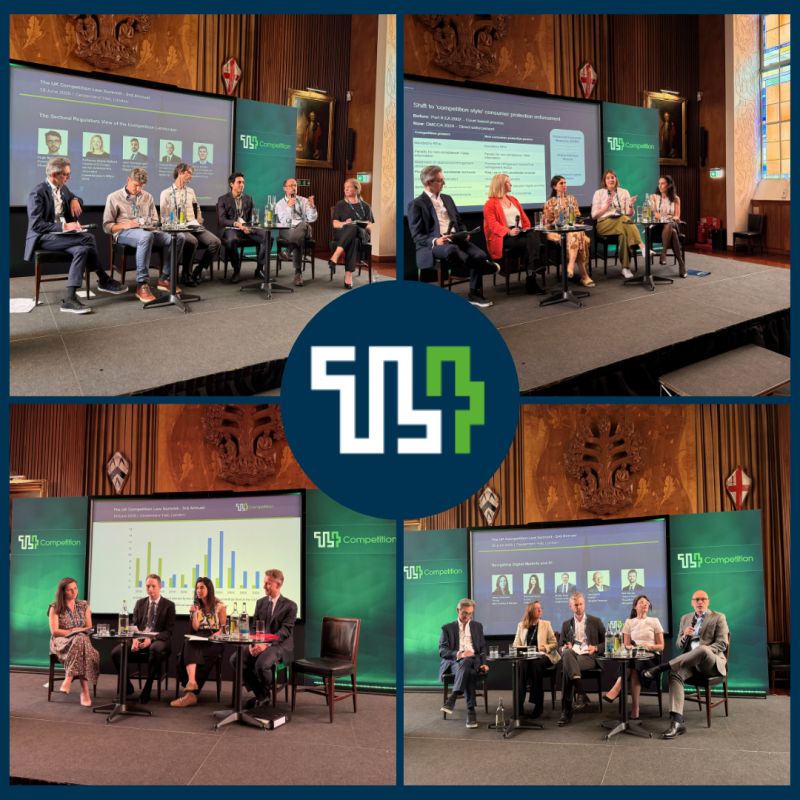
The sectoral regulators panel, with Hugh Mullan, Economics Director at Ofcom, Graeme Reynolds, Director of Competition at the Financial Conduct Authority, Katharine Hastie-Oldland, Director of the ICO Legal Service (Enforcement), Simon Burden, Head of Competition, Consumer and Digital at NatWest Group, and John Kontogeorges, Senior Expert Lawyer at Ofgem, offered a useful, if necessarily compressed, survey of how Ofcom, the FCA, the ICO, NatWest’s competition function and Ofgem are positioning themselves relative to the CMA’s expanded digital markets remit. The framing from the ICO’s representative, of data protection and competition as complementary rather than competing concerns, and the account of the ICO’s prioritisation criteria weighing vulnerable consumers and competition effects alongside other factors, spoke to ongoing debates about regulatory overlap in digital markets enforcement. A contribution from Ofgem, that its priorities around energy storage, generation and balancing arrangements are calibrated to align with both net zero objectives and European regulatory developments, was a reminder that the UK’s regulatory coordination challenge is not confined to the CMA’s relationship with sector regulators domestically.
Consumer enforcement under the DMCCA’s new toolkit
The consumer protection panel, comprising Katherine Kirrage of Osborne Clarke, Angelique Bret of Pinsent Masons, Nooreen Issany, Senior Legal Manager at VodafoneThree, and Pollyanna Tassell, Head of Legal at Carwow, addressed the practical operation of the DMCCA’s consumer enforcement powers, now formally on an equal footing with its competition powers in terms of available sanctions. An overview of the mandatory information gathering powers available under both regimes, and the availability of content warnings and access restrictions as remedial tools, underscored how substantially the DMCCA has expanded the CMA’s consumer enforcement toolkit relative to the pre DMCCA regime. A candid observation that the CMA wants to bring dark pattern cases but finds them difficult to evidence and prosecute acknowledged the gap between the breadth of the banned practices provisions and the practical difficulty of enforcement. It was discussed in the panel that the mere prospect of an investigation can be commercially damaging regardless of its eventual outcome was a point regulators would do well to internalise as conduct requirements and consumer enforcement activity expand.
Private enforcement: growth in collective actions
The private enforcement panel, with Josh Holmes KC of Monckton Chambers, Wessen Jazrawi of Mishcon de Reya, Kotryna Drasutyte of BRG and Richard Murgatroyd of RBB Economics, addressed the growth of competition damages claims in the UK. An account from the bar of the post Merricks surge in collective proceedings applications before the Competition Appeal Tribunal, and the Tribunal’s evident effort under recent procedural reform to keep the regime manageable through page limits on applications and tighter trial scope, described a system still actively calibrating its own capacity. A discussion of the line drawn in Evans and its subsequent application in the Microsoft standalone claim, where the Tribunal’s finding that part of the claim could proceed on an opt-out basis led it to certify the whole claim as opt-out, was flagged as a significant procedural development for digital platform cases going forward.
A further data point, that CAT filings have increased even as CMA initiated cases have decreased, and that most claims are now standalone actions often inspired by regulatory activity rather than following directly from an infringement decision, was discussed alongside the Meta case and the treatment of personal data as a non-monetary price. A critique from the economics perspective of the Tribunal’s increasingly sceptical treatment of expert evidence, citing AutoLiv as an example of assumptions and econometric models having previously been accepted without sufficient scrutiny, suggested that the evidentiary bar for expert testimony in collective proceedings is rising.
Digital markets and AI: interoperability, security and the limits of designation
The final substantive panel, on digital markets and AI, with Jenine Hulsmann of Weil, Gotshal and Manges, Tom Smith of Geradin Partners, Stavroula Vryna of Clifford Chance and Will Manley, Head of Digital Regulation at Slaughter and May, with Ali Nikpay contributing throughout, addressed preparation for the new digital markets regime, including SMS designations and conduct requirements. A framing of the interoperability and data access debate around publishers, AI agents and FRAND style access obligations, together with a caution that security is being treated as a parameter of competition before adequate safeguards are in place, was a recurring theme. A blunt assessment that pre-SMS commitments in cloud and mobile markets have not amounted to genuine commitments in practice, and a further observation that hardcore compliance expectations have given way to a more participatory, negotiated mode of regulatory engagement, both reinforced the sense that conduct requirements are being shaped iteratively and reactively, rather than according to a settled ex ante template. A closing contribution, that the CMA operates on a comparatively short political leash, and that there may be more room in the UK than is generally assumed for industrial policy to complement the unlocking of AI opportunities, offered a useful counterweight to the more cautious tenor of the panel’s other contributions.
Closing
Ali Nikpay’s closing remarks brought the day back to its opening question: whether growth and enforcement are genuinely compatible objectives or whether the growth agenda represents a substantive change of direction dressed in continuity language.
On the evidence presented across the six panels, that question remains open. What is clearer is that the institutional and procedural architecture surrounding UK competition law, from the CAT’s tightening grip on collective proceedings to the DMCCA’s expanding conduct requirement regime, is evolving rapidly across enforcement, merger control, regulatory coordination, consumer protection, private litigation and digital markets alike.


